
How to Design a Landscape Plan for Unique Properties
Homeowners in the Grey Highlands and Georgian Bay face unique challenges when planning outdoor spaces. Water flow, soil quality and rugged terrain can make or break a landscape. Without a thoughtful plan, steep grades, shorelines or large acreage lead to erosion, flooding and heavy maintenance. A holistic, sustainable mindset helps you turn tricky terrain into a thriving, low-impact retreat.
We like to support the responsibility to care for the land that can come with living close to nature. If you want to do more, this guide will help you learn how to do landscape design for your property. Whether your site is near the Blue Mountains, by a waterfront on Georgian Bay, a quaint cottage, or large acreage, thoughtful planning makes a big difference. If you have ever wondered what landscape design involves beyond planting, it is the process of planning land, water, plants, and structures so your outdoor space works well and feels balanced. If you would like professional guidance, you can explore our landscape design services to see how thoughtful planning can bring these ideas to life.
What Makes a Property “Unique” in Landscape Planning?
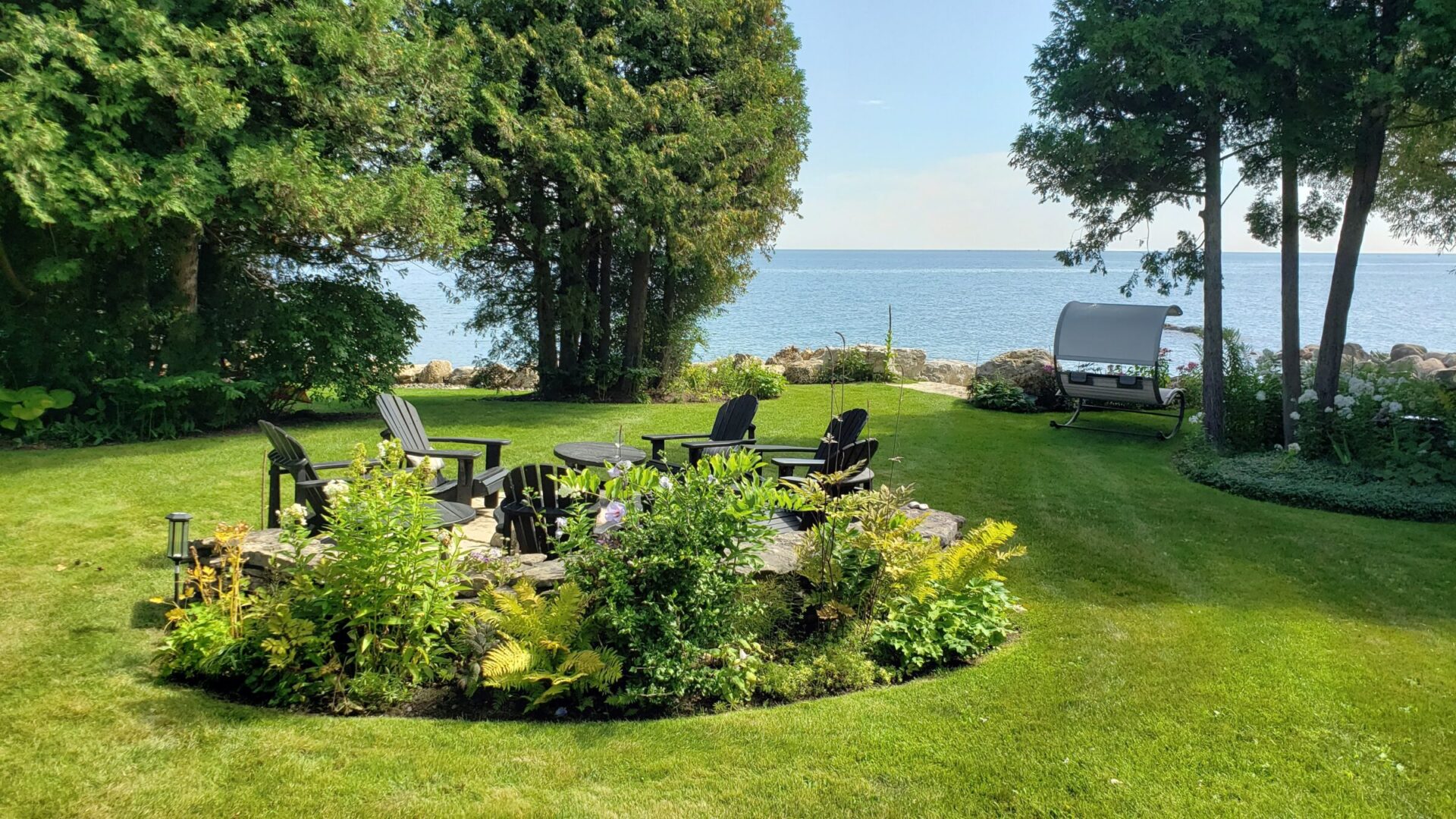
Every property has a personality and how to do landscape design for every space will differ. Some sites look out over Georgian Bay, others perch on the shoulders of the Blue Mountains, and some spread out across rolling farmland. The first step in learning how to design a landscape plan is recognizing what makes your site tick. Is it the steep grade that sends rainwater rushing toward your foundation? Maybe it’s the sandy shoreline that shifts with every storm, or the compacted clay that holds water like a sponge. Assessing these details helps you choose the right features for your design.
For homeowners exploring do it yourself landscape design, understanding these site conditions early will save time, money and frustration later. A unique property often has one or more of the following characteristics:
- Micro-climate: Elevation, sun exposure and wind patterns can vary dramatically over a small area. Exposed ridges call for wind-tolerant plantings and structures, while sheltered hollows may stay damp longer.
- Unusual topography: Slopes, boulders and irregular grading require creative solutions like creating level areas for patios, and introducing steps and retaining walls. On mountain and sloped properties, proper footing and drainage are crucial.
- Proximity to water: Waterfront sites require careful management of runoff and shoreline vegetation to prevent erosion and protect water quality.
- Large acreage or cottage lots: Wide open spaces allow for outdoor rooms, trails and recreation zones but also demand thoughtful zoning and maintenance strategies to avoid over-planting and reduce mowing.
When you take time to understand these factors, you’re halfway to designing a plan that works with nature rather than against it. Keep in mind that Garden Holistics’ philosophy is grounded in organic and sustainable practices; we use native and drought-hardy plants and avoid harsh chemicals. This means your landscape will be built to last, support biodiversity and look good doing it.
Soil Types That Shape Every Design: Clay vs Sandy (and What They Mean for Roots and Drainage)
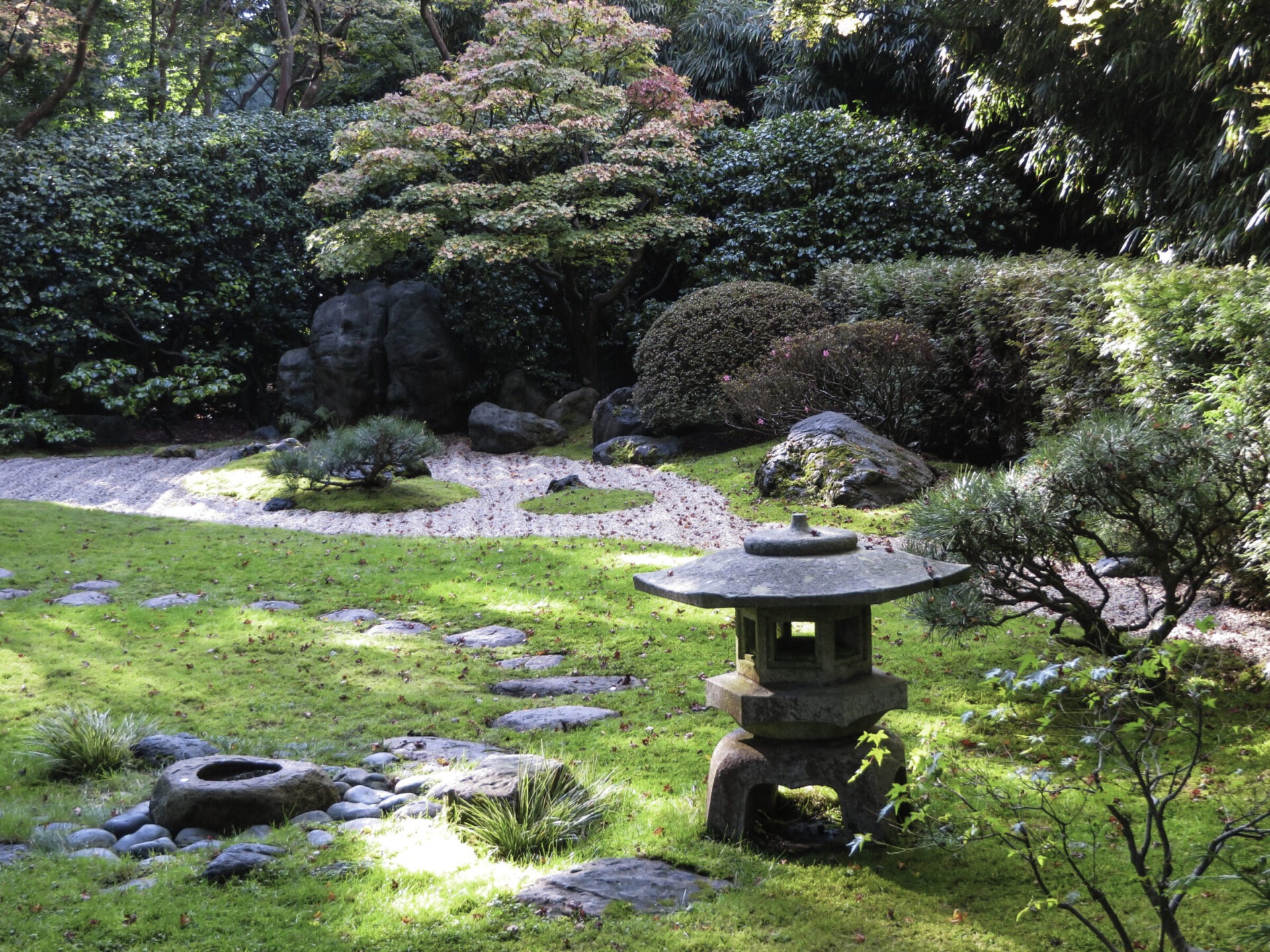
Healthy soil is the foundation of any successful landscape plan. You can’t plan where to plant or how to design a landscape plan until you know what you’re working with beneath the surface. In the Grey Highlands and Georgian Bay region you might encounter heavy clay, sandy soils or a loamy mix. Each type has its quirks.
Clay soil is dense, drains slowly, and compacts easily, so adding compost or leaf mould helps improve structure and root growth. Garden Holistics uses house-made compost and natural bark mulch to regulate moisture. Sandy soil drains quickly and holds fewer nutrients, but organic matter improves water retention. Testing soil pH and nutrients is also helpful, especially on cottage properties.
To match your planting to your soil:
- Dig a few test holes. Feel the texture between your fingers; clay feels sticky when wet; sand feels gritty.
- Observe drainage. Fill the hole with water and see how quickly it drains. Slow drainage suggests clay; fast drainage suggests sand.
- Amend accordingly. For clay, incorporate compost and coarse sand to improve structure. For sand, add compost and aged manure to increase moisture retention.
- Choose plants suited to the soil. Clay-loving plants like willows and ferns will thrive in wetter soils, while sandy sites suit drought-hardy grasses and shrubs.
Using native plants reduces the need for extra watering and fertilizers. These plants are naturally adapted to local soil and rainfall conditions, so they require fewer inputs and help attract beneficial insects and pollinators. Garden Holistics focuses on native and drought tolerant plants to create resilient landscapes that support wildlife and need less maintenance.
Grading 101: How to Move Water Where You Want It (Without Wrecking the Yard)
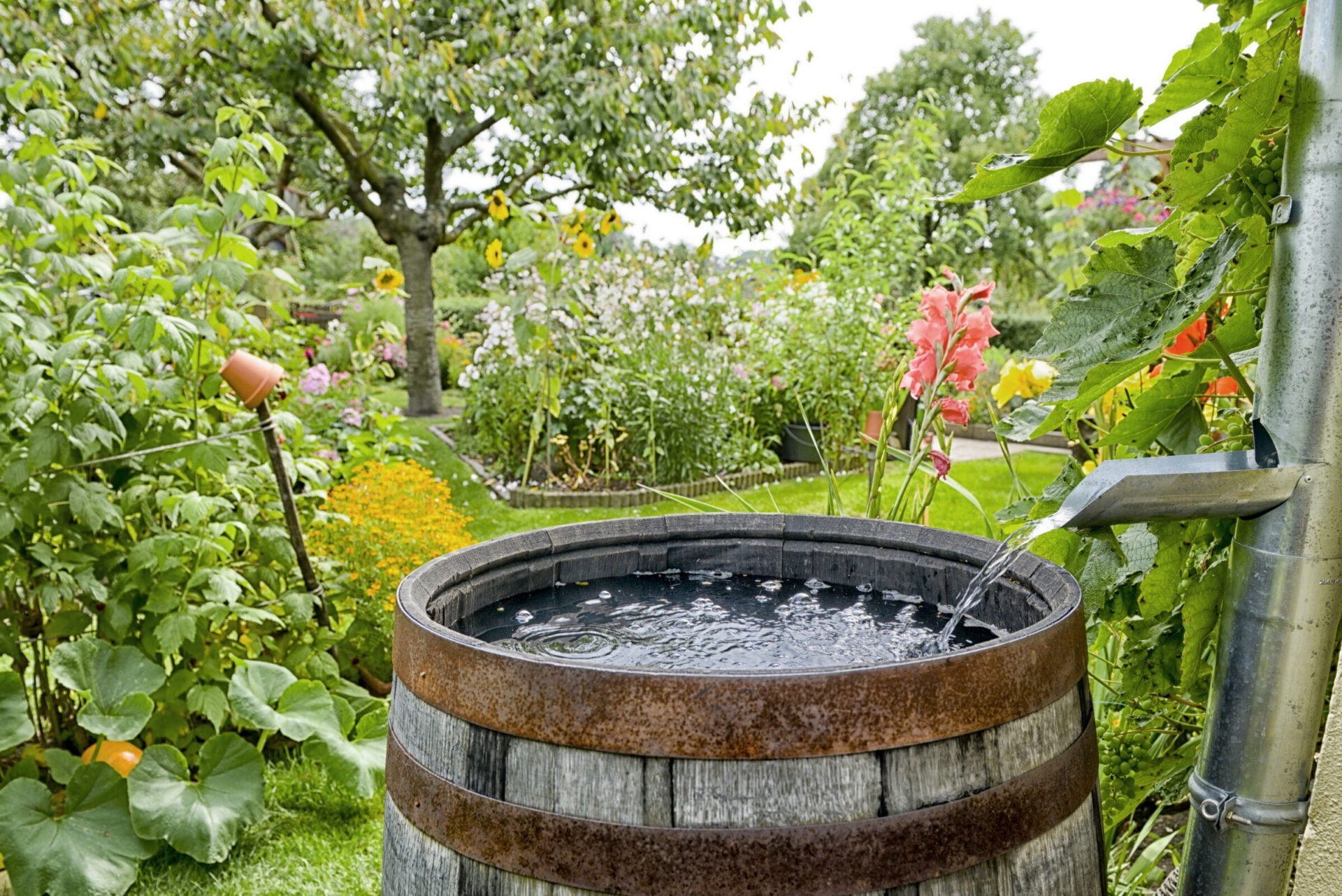
Water plays a major role in landscape health. Too little harms plants, while too much can damage foundations or shorelines. Proper grading directs water away from buildings and toward areas where it can soak into the ground. When learning how to do landscape design, understanding slope is important. Patios, walkways, and driveways should slope away from buildings so water drains safely.
For eco-conscious homeowners, the goal isn’t to send water straight to the storm drain. Instead, create swales, rain gardens or permeable surfaces to allow water to infiltrate and recharge the water table. Garden Holistics specializes in modern and formal designs that still support infiltration. We use permeable pavers, gravel paths and graded planting beds to slow runoff. Our design-build approach looks like this:
- Assess existing grades with a level or laser to determine slope direction and low spots.
- Create gentle slopes away from buildings, ensuring the first few metres around your house shed water properly.
- Use swales or French drains to intercept water on sloped sites and redirect it toward rain gardens or natural wetland areas.
- Install rain gardens and infiltration basins at the bottom of slopes to soak up excess water. Plant them with native wetland species like Joe-pye weed or blue-flag iris, which thrive in saturated soils.
By integrating grading with your planting plan, you create a self-sustaining system where water is a resource rather than a problem. Sustainable design puts water back into the ground instead of sending it into pipes.
Mountain and Sloped Sites: Steps, Patios, and Stability-Friendly Layouts
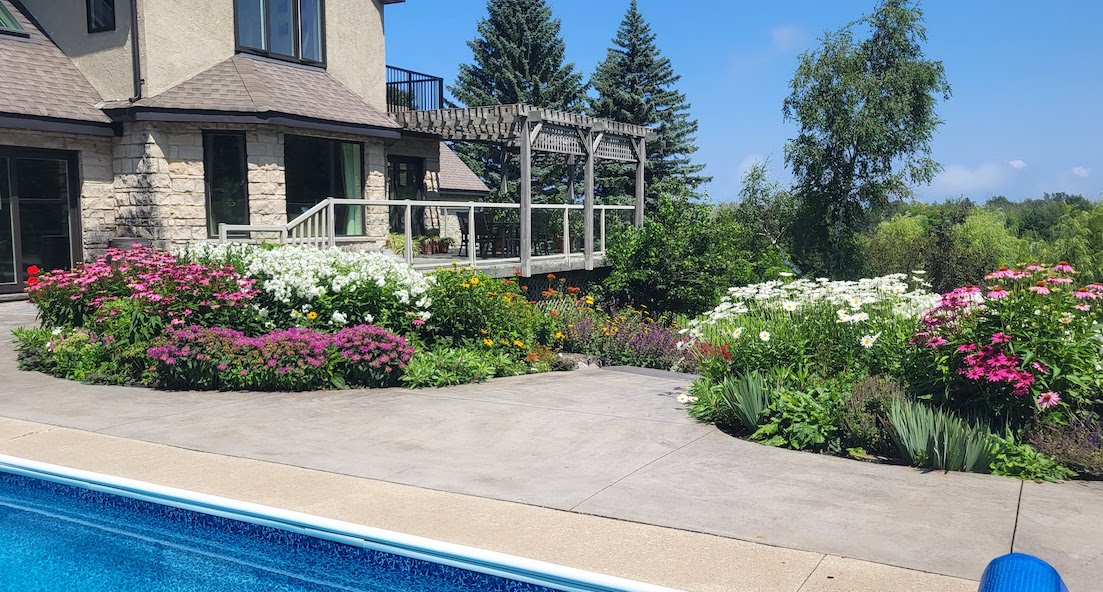
Mountain living offers stunning views but comes with slopes that can be challenging to navigate and maintain. Understanding how to design a landscape plan for sloped sites means taming gravity. The simplest way to make steep terrain more usable is to break it into manageable levels.
Building wide, meandering steps can help you navigate steep slopes as well as forming retaining walls on each level. This not only creates flat planting areas but also slows runoff and reduces erosion. On shallow slopes, creating a dry creek or streambed can control moisture and add a focal point. Groundcovers like creeping thyme or native sedges provide low-maintenance slope coverage and prevent soil from washing away.
To get started:
- Map the grade. Use contour lines to see where to cut and fill soil. Keep slopes under 4:1 (four units of run for every one unit of rise) for safety and ease of mowing.
- Design terraced/flat zones. Retaining walls, natural stone outcrops and steps break the slope into usable platforms. Include footpaths between levels for access.
- Add structures carefully. Pergolas or small decks can anchor terraced spaces and provide shade, but they need solid footings designed by professionals to ensure stability.
- Plant to stabilize. Deep-rooted natives like switchgrass, serviceberry or juniper provide erosion control. A variety of root depths creates a web that holds soil.
By combining careful grading, flat areas for patios, and raised garden bed retaining walls, you can transform a steep hillside into a series of inviting outdoor rooms while maintaining the natural feel of the landscape.
Waterfront Sites: Keeping Runoff in Check While Protecting Access and Views
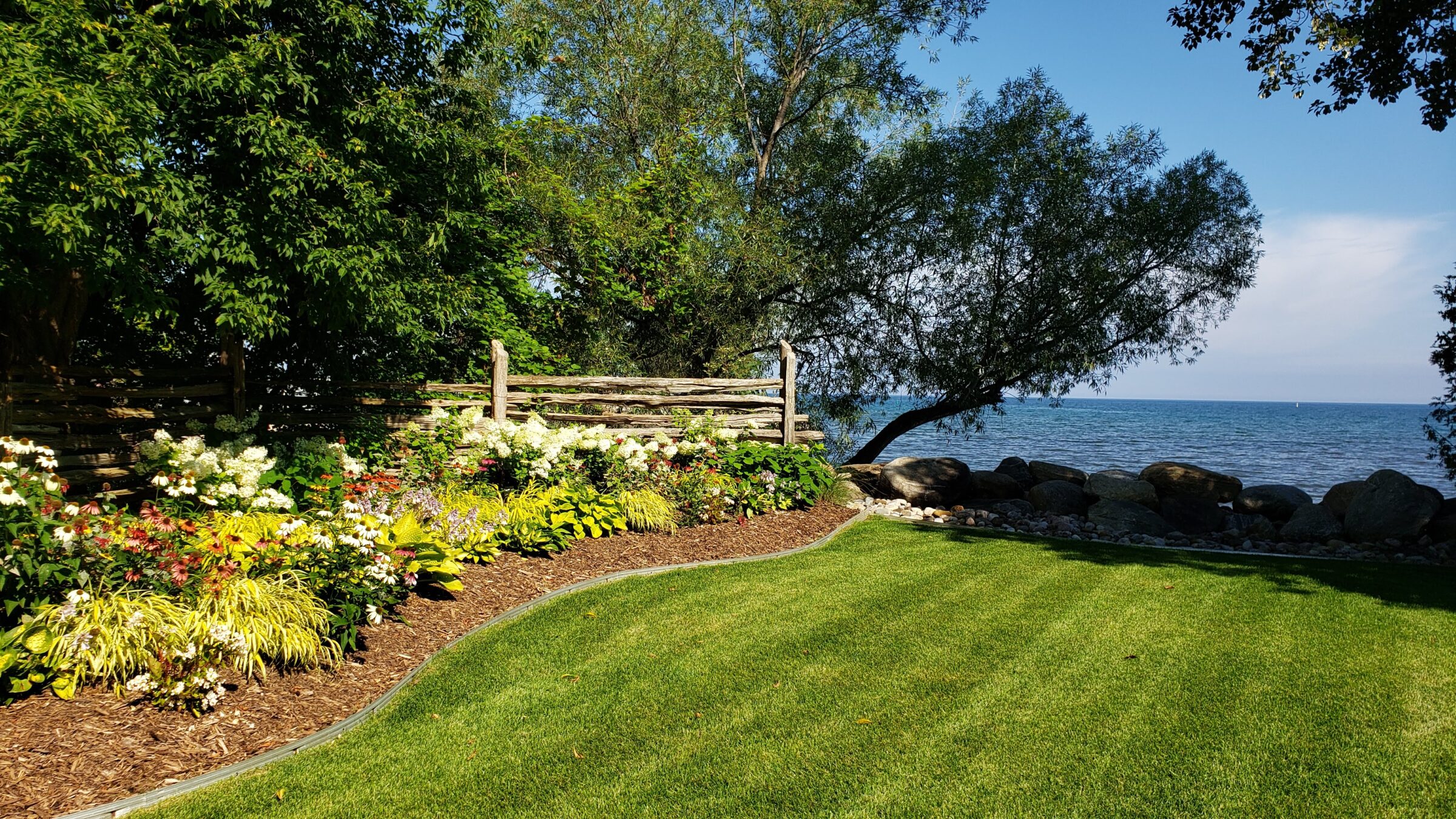
Living near Georgian Bay or other regional lakes is beautiful, but shoreline properties need careful planning. Wave action and runoff can cause erosion and affect water quality. Natural shoreline buffers made of native grasses, shrubs, and wetland plants help stabilize the banks and filter pollutants before they reach the lake. Removing these plants can increase erosion and pollution.
When designing your waterfront landscape plan, consider these best practices:
- Retain or restore vegetation strips. Keep a natural buffer of at least three metres with native plants like willows, dogwoods and rushes. These roots bind soil and absorb nutrients.
- Control runoff from upland areas. Use swales or rain gardens to capture roof and driveway runoff before it reaches the shoreline. Direct downspouts into rain barrels or infiltration trenches.
- Preserve views and access. Design access paths that wind through vegetation rather than cutting straight down the slope. Use permeable surfaces such as stepping-stones or gravel to minimise compaction.
- Choose plantings suited to wet areas. Many native shoreline plants thrive in fluctuating water levels. Blue flag iris, cardinal flower and swamp milkweed attract pollinators and create habitat.
Eco-friendly shoreline design isn’t about turning your yard into a wild jungle. It’s about finding a balance between human use and ecological health. Garden Holistics achieves this by integrating modern, formal gardens with natural buffers and by using only hand tools and organic materials to protect both water quality and your view.
Cottage Lots: Simple Zones for Arrival, Gathering, and Low-Fuss Seasonal Care
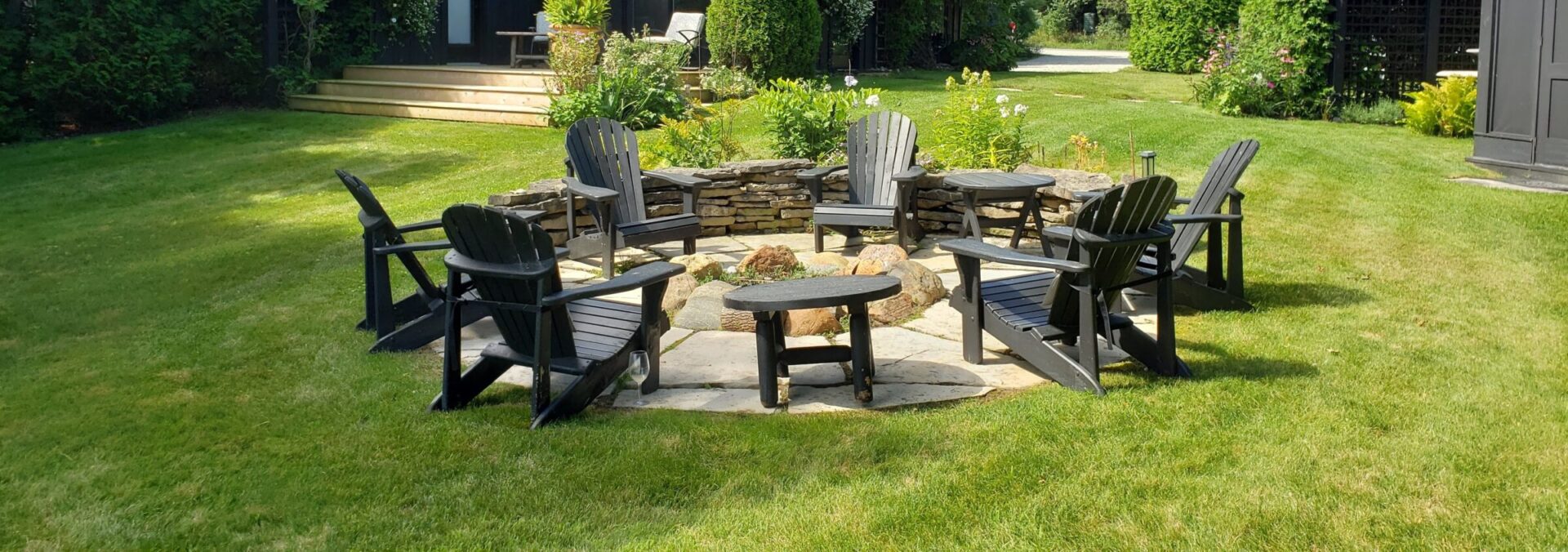
Cottage properties in the Grey Highlands often serve as weekend retreats. Your landscape plan should prioritize relaxation over constant upkeep. A low-maintenance approach means dividing your lot into zones for arrival, gathering and seasonal use. Adding a French drain can solve flooding near a porch and replacing turf with rock can reduce mowing and watering. Rocks offer design flexibility but can be costly and retain heat, so balance them with plantings and shade.
To help design your cottage landscape:
- Create an arrival zone. Use permeable driveways and defined parking bays. Plant shade trees for cooling and delineate pathways to the cottage door.
- Set up gathering areas. A deck or patio near the water for dining, a fire pit area for evening conversations and a hammock or reading nook under trees. Keep features simple to reduce maintenance.
- Plan for seasonal use. Include storage for kayaks, a place to launch boats, and a small garden bed for herbs or vegetables. Use native perennials that require minimal care.
- Test soil and choose plants wisely. Test soil pH before planting. Cottage soils can be sandy or rocky; choose drought-tolerant natives and plant them in groups for easier watering.
- Keep mowing zones small. Allow meadow grasses and wildflowers to fill spaces beyond the main gathering area, reducing mowing and supporting pollinators.
Garden Holistics’ maintenance philosophy suits cottage lots perfectly: no gas mowers, no pesticides, hand weeding and natural deterrents for pests. For homeowners who want simple seasonal colour without added upkeep, seasonal planter services can also help keep cottage gardens looking fresh throughout the year. We encourage clients to embrace a bit of wildness around the edges, it’s better for the local environment and gives you more time to enjoy your weekend.
Large-Acreage Planning: Outdoor Rooms, Trails, Recreation Areas, and “Maintenance Zones”
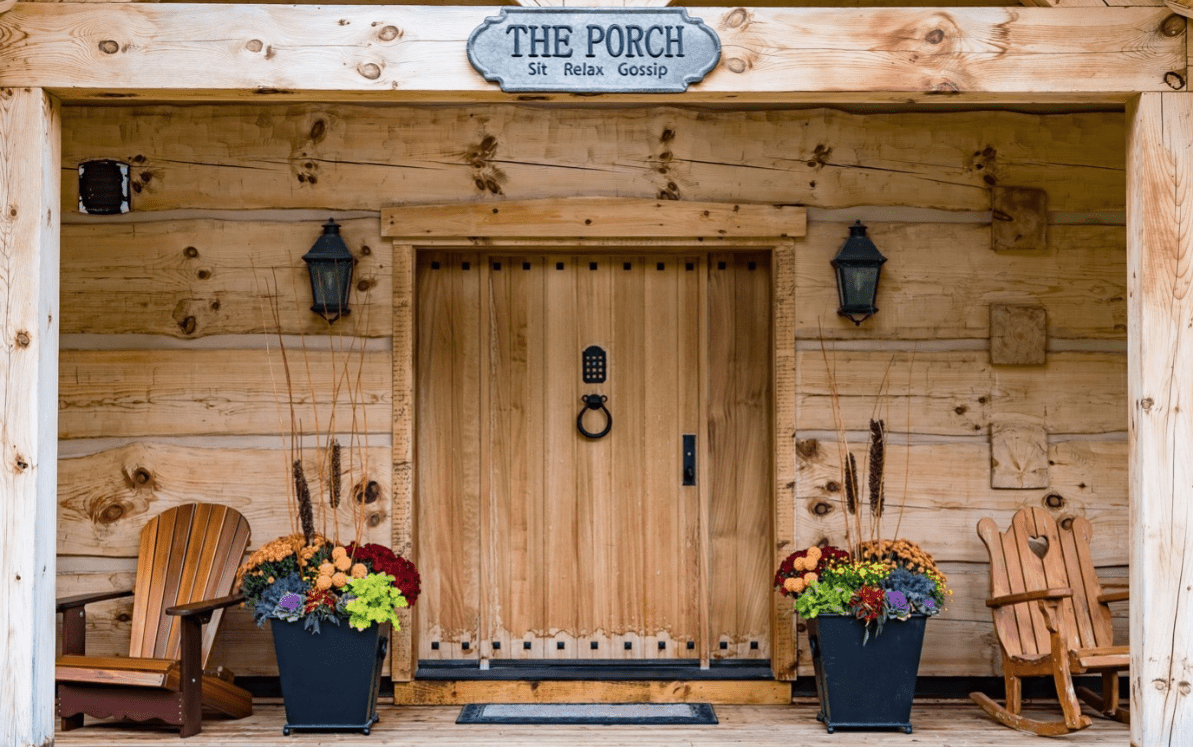
A large property offers limitless possibilities but can also feel overwhelming. Without a clear plan, you might over-plant near the house, underutilise open spaces or create a maintenance monster. When learning how to design estate landscaping, think in terms of functional zones and phases.
Before implementation, many property owners sketch layouts or learn how to draw landscape design plans to visualize pathways, outdoor rooms and planting areas across the land. Start with a master plan that maps the entrance, outdoor living areas, and recreation zones. Divide the property into “rooms” such as orchards, meadows, or woodland trails using plantings and hedges. Add shrubs or ornamental grasses between spaces to soften edges and create depth without overplanting.
Key steps include:
- Draw a circulation map. Plan gravel or mowed paths, service drives and utility corridors. Make sure vehicles and mowers can access each area.
- Prioritize zones. Place high-maintenance areas like vegetable gardens or flower beds near the house. Beyond that, opt for moderate-maintenance meadows or orchards and low-maintenance wild zones.
- Phase your project. There’s no need to do everything at once. Start with the entry and near-house plantings, then add outbuildings, trails and recreation areas over several seasons.
- Integrate recreation. Build trails for walking, biking, or skiing. If you have the room, designate a field for sports or a quiet woodland for hammocks. Consider features like ponds, meadows, or amphitheatre-style seating for a spacious fire area.
- Design for maintenance. Use drip irrigation and rainwater harvesting. Zone mowing so that only key areas are cut frequently, leaving wild areas for pollinators. Improve soil health with mulch and compost.
Garden Holistics’ team of five Red Seal certified horticulture specialists knows how to orchestrate these elements. We use organic inputs and native plantings to ensure your acreage remains a healthy ecosystem. We’ll help you create an estate landscape that welcomes wildlife, supports human activities and looks beautiful in every season.
Outdoor Living Features That Play Nicely With the Site: Pergolas, Shade Structures, and Green Roofs on Outbuildings
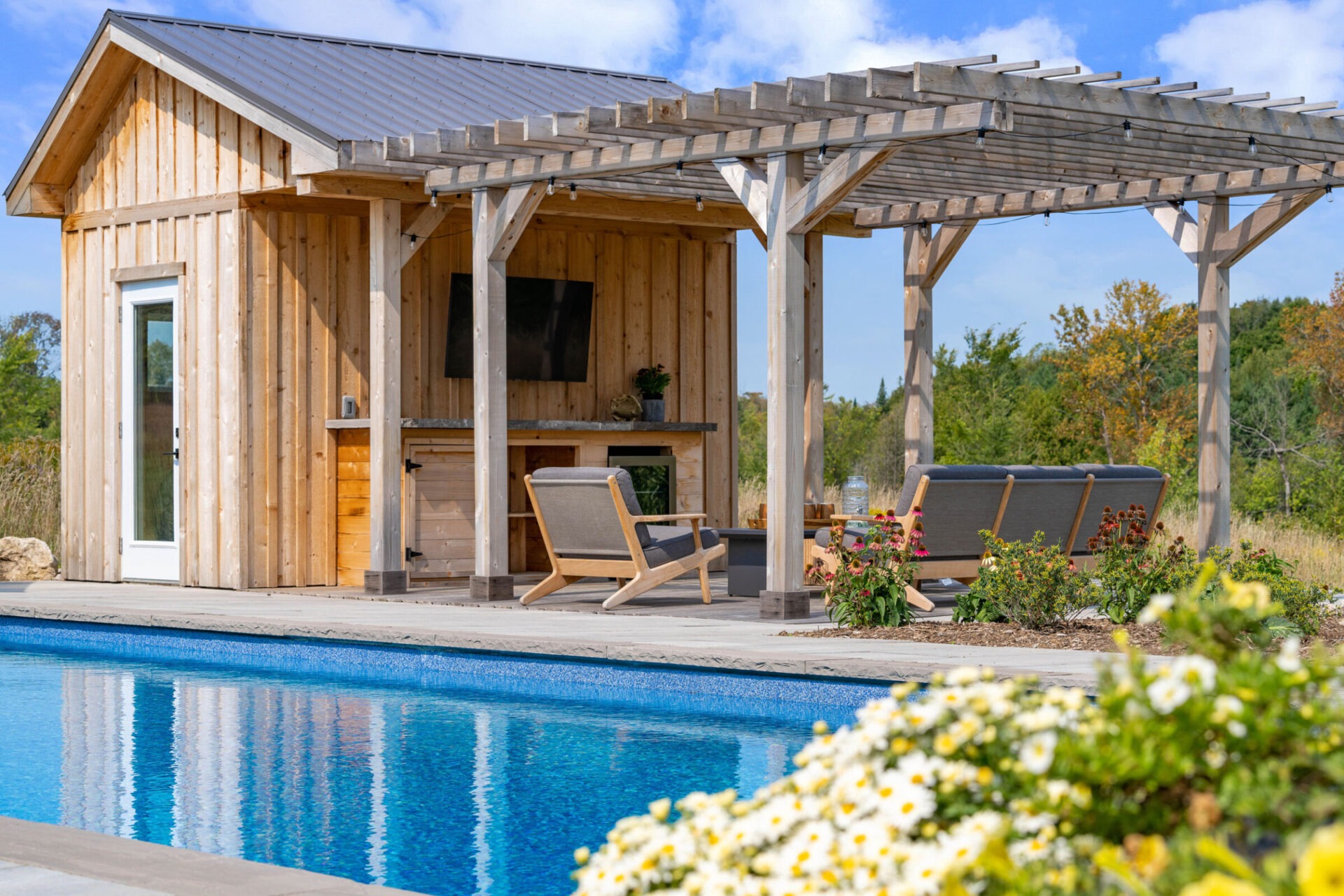
Outdoor structures extend your living space and complement the natural environment. The trick is to choose features that fit your property personality and support sustainability. Pergolas, gazebos and green roofs are excellent options for eco-conscious homeowners, particularly when considering what is sustainable landscape design going to look like for your property. Approaches like this typically focus on environmentally responsible materials, water management and biodiversity.
A pergola has an open lattice roof that provides partial shade and airflow. It can stand alone or attach to a home and works well over patios or pools. Pergolas are flexible in size and material and can support vines and lighting. Gazebos have solid roofs and provide more shade, often serving as garden focal points. On sloped sites, structures should have deep footings and sit on level ground.
Green roofs on outbuildings or garages add ecological value. They include layers of vegetation, growing medium, and drainage, helping store rainwater, insulate buildings, and support pollinators. They are especially useful near waterfronts where they help filter runoff.
When planning outdoor structures:
- Orient for shade and views. Use pergolas to create dappled shade over seating areas without blocking breezes. Position gazebos to frame vistas or provide shelter from prevailing winds.
- Choose sustainable materials. Specialty hardwoods are a great, premium option, such as Kebony. Kebony is a sustainable, durable option. Cedar and locally sourced stone blend with the landscape and age gracefully.
- Combine with living elements. Train grapevines or wisteria over pergolas; plant sedums and native grasses on green roofs. These living features support biodiversity.
- Ensure water management. Use rain chains or integrated gutters on shade structures to direct water into rain gardens. Green roofs should have overflow outlets to manage heavy rains.
By selecting the right combination of pergola, gazebo or green roof, you can enhance comfort, protect your plantings and create focal points that delight guests.
Fire Features (Gas and Wood Burning), Pools, and Integrated Hot Tubs/Saunas/Cold Plunge: Placement and Safety Basics
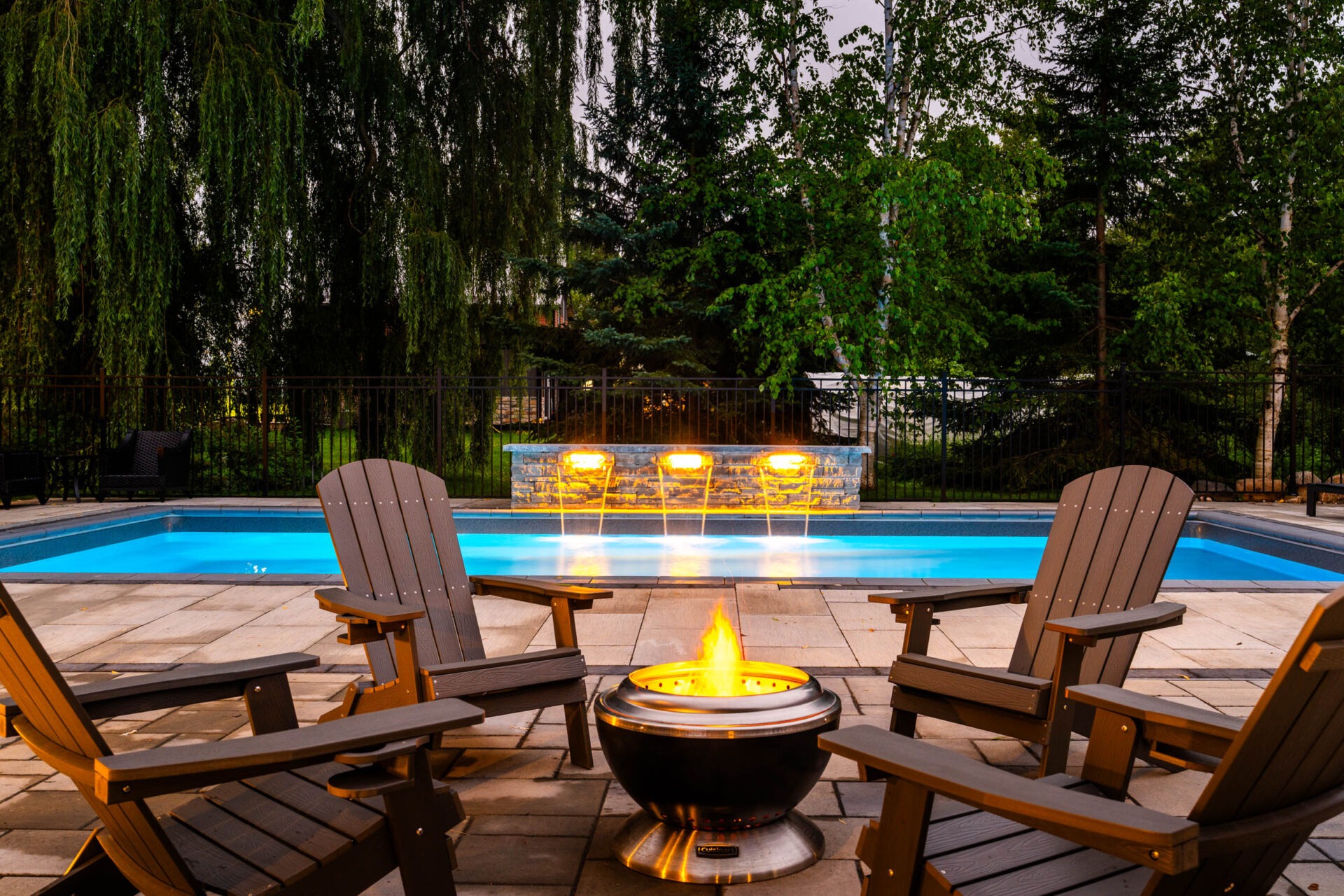
Gathering around a fire or relaxing in a spa is enjoyable, but placement must consider safety and the environment. Fire pits should be used outdoors and kept at least three feet from the house and anything flammable. Local guidelines should be followed, but in general keep a safe distance from flammable structures and overhanging trees.
Always use a metal screen over wood‑burning fires to keep sparks contained. Keep children and pets supervised and have water or a fire extinguisher nearby. When planning pools or spas, check local guidelines. Place them in sunny areas that are protected from strong winds.
Your placement checklist should ideally include:
- Choose level, non‑combustible surfaces. Flagstone patios or gravel pads work well under fire pits and hot tubs.
- Respect clearances. Maintain distance from buildings, fences and overhanging vegetation. Keep hot away from walls and very far from power lines.
- Provide ventilation. Gas fire features and saunas require adequate airflow; never use them in enclosed sheds.
- Integrate with water management. Pools and hot tubs should connect to rain gardens or soak‑away pits so spillover doesn’t erode slopes or pollute waterways.
With thoughtful placement and adherence to safety guidelines, you can enjoy fire and water features while keeping people, structures and the environment safe.
Softscaping for Proactive Pest Prevention: Plant Choices, Spacing, Airflow, and Habitat Balance
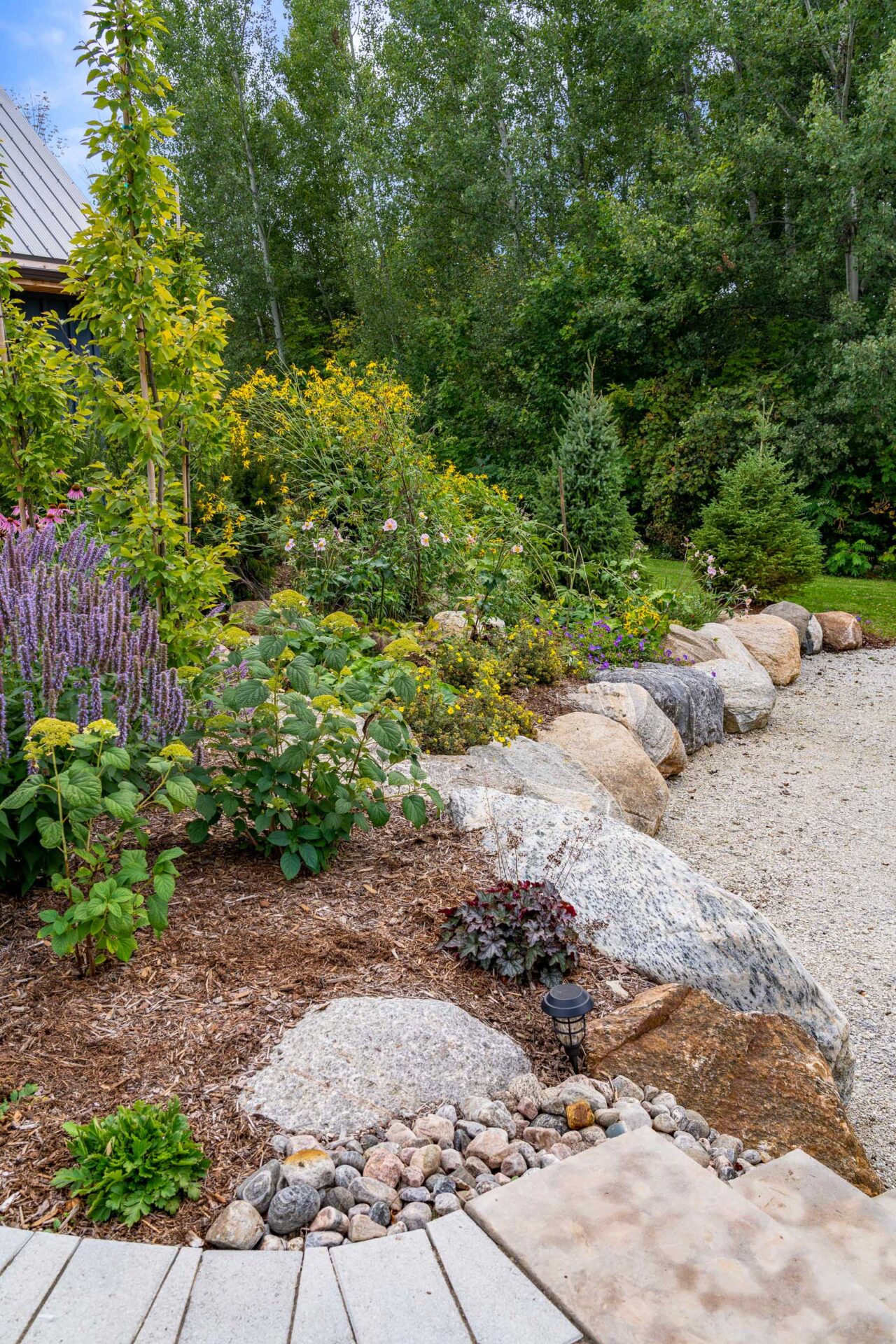
Organic gardening does not mean inviting pests. Choosing the right plants, spacing them well, and supporting beneficial insects helps maintain a healthy landscape without harsh pesticides. Insects like ladybugs and lacewings naturally control common pests, while native plants provide them with food and shelter.
Proper spacing and pruning also helps prevent disease. Good airflow allows leaves to dry quickly after rain, reducing the risk of fungal problems such as powdery mildew. Steps for proactive pest prevention can include:
- Select diverse native plants. A mix of flowering perennials, shrubs and trees attracts a range of beneficial insects and birds. Native plants are adapted to local pests, and their natural defences discourage infestations.
- Provide habitat and food. Use hedgerows, meadow strips or pollinator gardens to offer shelter and nectar. Green roofs and ponds also support beneficial insects.
- Space plants thoughtfully. Follow mature plant widths when planting; leave room for air to circulate. Use open branching shrubs and avoid dense hedges that trap moisture.
- Prune and clean. Remove diseased or dead material promptly to prevent spread. Clean tools with 70% isopropyl alcohol to reduce disease transmission.
- Mulch and compost. Mulch conserves moisture, suppresses weeds (which can harbour pests) and improves soil health. Garden Holistics uses natural bark mulch and home‑made compost to supply nutrients without chemical fertilizers.
Our maintenance philosophy also includes pest management through natural deterrents. We prune selectively when there’s evidence of pest presence. By supporting a balanced ecosystem, you can enjoy a beautiful garden that practically takes care of itself.
What Is Landscape Design? – Bringing It All Together
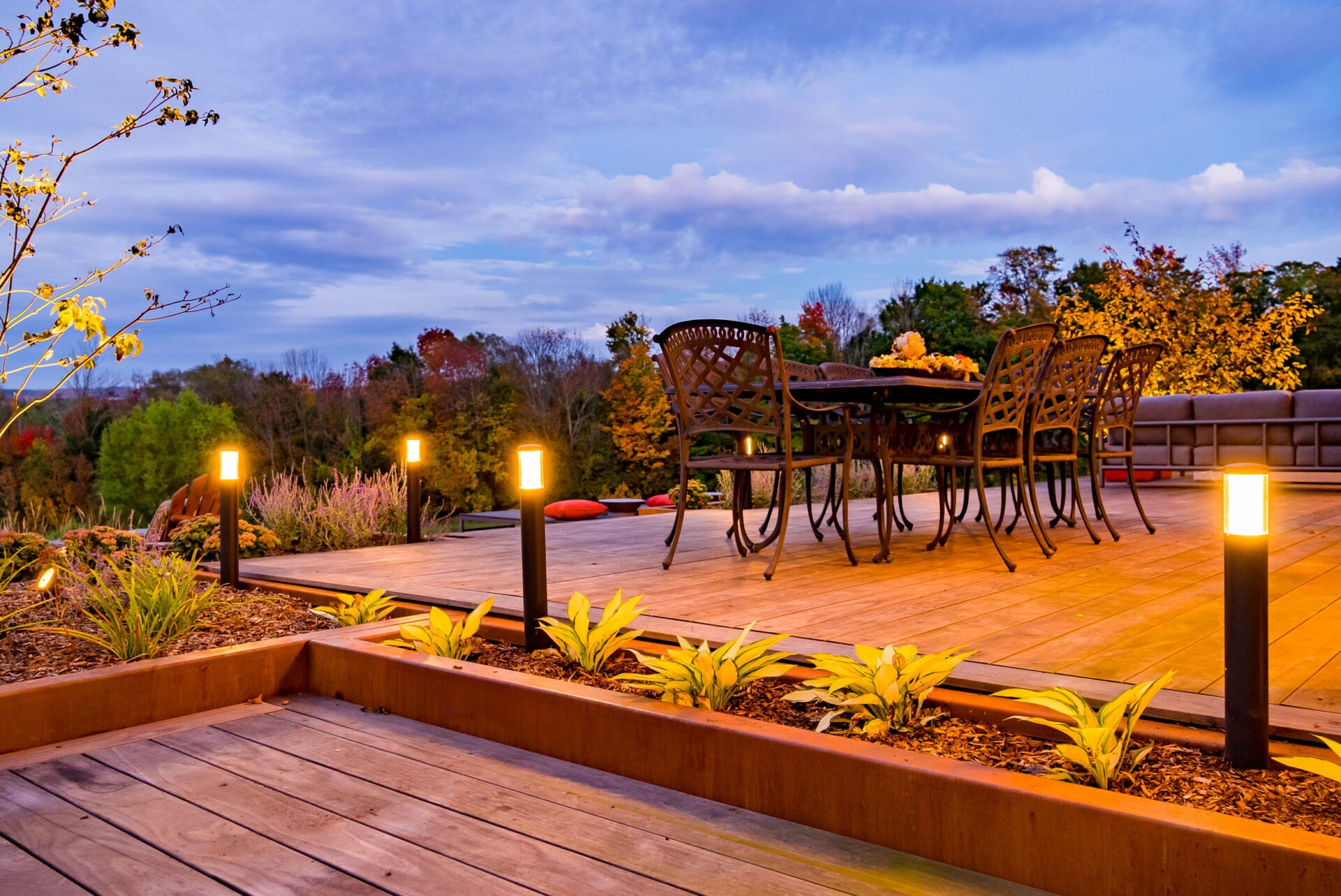
Figuring out how to design a landscape plan for unique properties starts with understanding the land, including soil, slope, and climate. Use native plants, manage water properly, and place features like fire pits or pools safely.
With a sustainable approach and expert guidance from Garden Holistics, you can create an outdoor space that lasts for generations. Request a consultation to get started.
Summary
Understanding how to design a landscape plan for unique properties means embracing the land’s character while following sustainable practices. Start by assessing soil type and drainage, then shape the terrain to move water away from structures and toward infiltration areas. Incorporate eco‑friendly structures like pergolas, green roofs and gazebos, and place fire pits and spas at safe distances from structures.
Finally, choose native plants, space them for airflow and support beneficial insects to prevent pests naturally. These guidelines help you create a resilient, beautiful landscape that works in harmony with your property.