
How to Design Estate Landscaping for Big Properties
Owning a large waterfront property in Grey Highlands or along Georgian Bay can feel like a gift. Wide open space, beautiful views, and room to explore nature are all part of the experience. But when you begin planning the landscape, the scale of the property can quickly feel overwhelming.
Large properties often lack structure at first. Without a clear layout, outdoor areas may feel disconnected or underused. One corner becomes a forgotten lawn, another turns into an unused patio, and pathways may not guide people where they naturally want to go. When the land is close to water, thoughtful planning also becomes important for protecting soil, plant health, and the surrounding ecosystem.
This is where learning how to design estate landscaping becomes helpful. A clear plan allows you to shape large outdoor spaces into purposeful areas that work together. Good planning also supports environmental care, using plant choices and grading methods that help water return naturally to the ground.
Understanding what landscape design is and how it functions on larger properties can help you approach the process with confidence. Whether you are exploring do it yourself landscape design ideas or simply learning how large properties are structured, thoughtful planning makes the space easier to enjoy and care for.
1. Start With Use Zones: Arrival, Living, Play, Quiet, And Service Areas
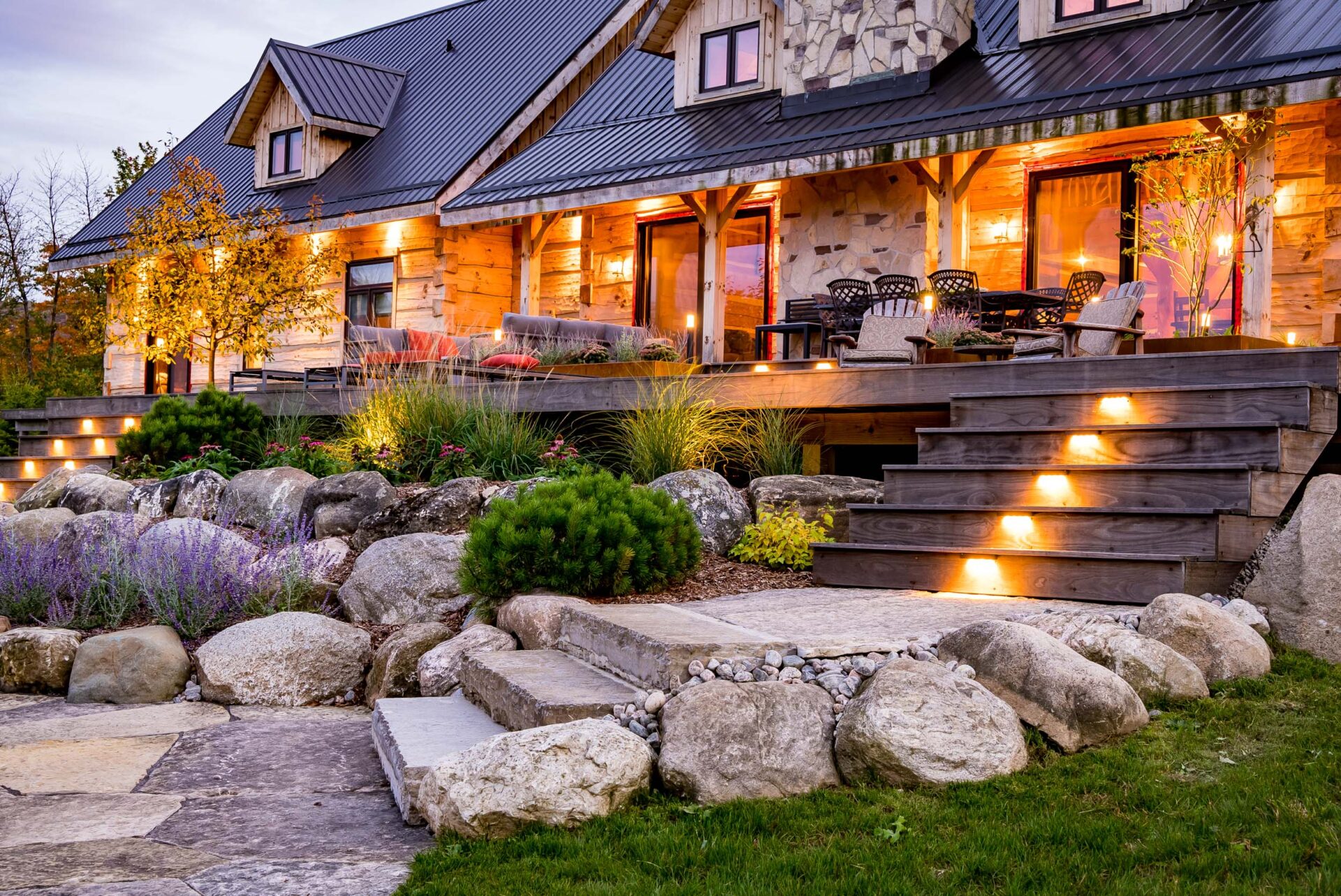
The first step in how to design estate landscaping is dividing your property into use zones. Large properties benefit from clear purpose in each area. Without this structure, the space can feel scattered rather than connected. A helpful starting point is to identify five core zones:
- Arrival Area
This is where guests first experience the property. Driveways, entry gardens, and pathways set the tone. - Living Area
Outdoor seating, dining spaces, and patios become the everyday gathering spaces. - Play Area
Open lawn, recreation features, or trail access can be placed where activity makes sense. - Quiet Area
These areas focus on relaxation, often overlooking water or natural features. - Service Area
Storage sheds, compost spaces, and tool storage are best tucked away but still accessible.
This zoning approach helps answer a common early question: what is landscape design on a large property? At its core, it is about organizing land so each part serves a purpose while still feeling connected to the whole property. For eco-conscious homeowners, zoning also supports sustainable practices. Sensitive shoreline areas can remain natural, while activity zones stay concentrated in durable sections of the property. This helps protect soil structure and native plant life. When learning how to design estate landscapes, zoning becomes the foundation that guides every other decision.
2. Build A Simple Circulation Plan: Paths, Loops, And Winter-Friendly Routes
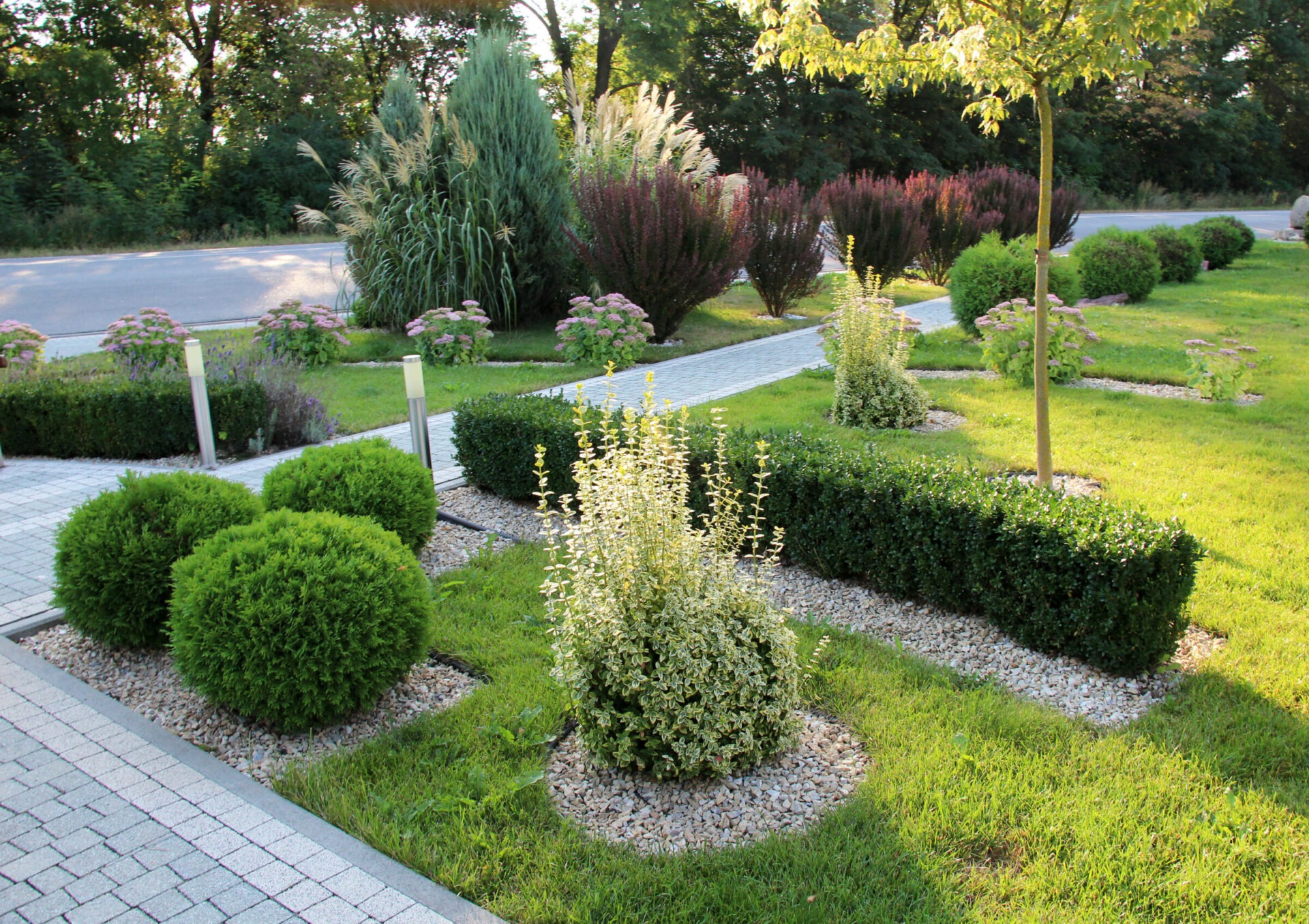
Once zones are defined, the next step in how to design estate landscaping is connecting them with clear circulation routes. On large properties, thoughtful pathways prevent unnecessary foot traffic through planting areas or natural habitats. Circulation planning simply means deciding how people move around the property.
- Paths between major zones
- Walking loops for relaxation
- Routes that remain accessible during winter months
In waterfront regions like Georgian Bay, winter-friendly routes are especially useful. Packed gravel paths or wide natural stone walkways can remain usable even during colder seasons. If you enjoy planning projects yourself, learning how to draw landscape design plans can help visualize these connections. A simple sketch showing entry points, pathways, and gathering areas often reveals where circulation needs adjustment. It can also be helpful when looking to work with a professional
This stage is also a good time to think about sustainable materials. Permeable surfaces allow rainwater to move through the ground instead of running off into nearby waterways. When people explore how to design estate landscapes, circulation planning often becomes the step that ties the entire property together.
3. Create Outdoor Living Rooms: Pergolas, Shade Structures, And Seating Nooks
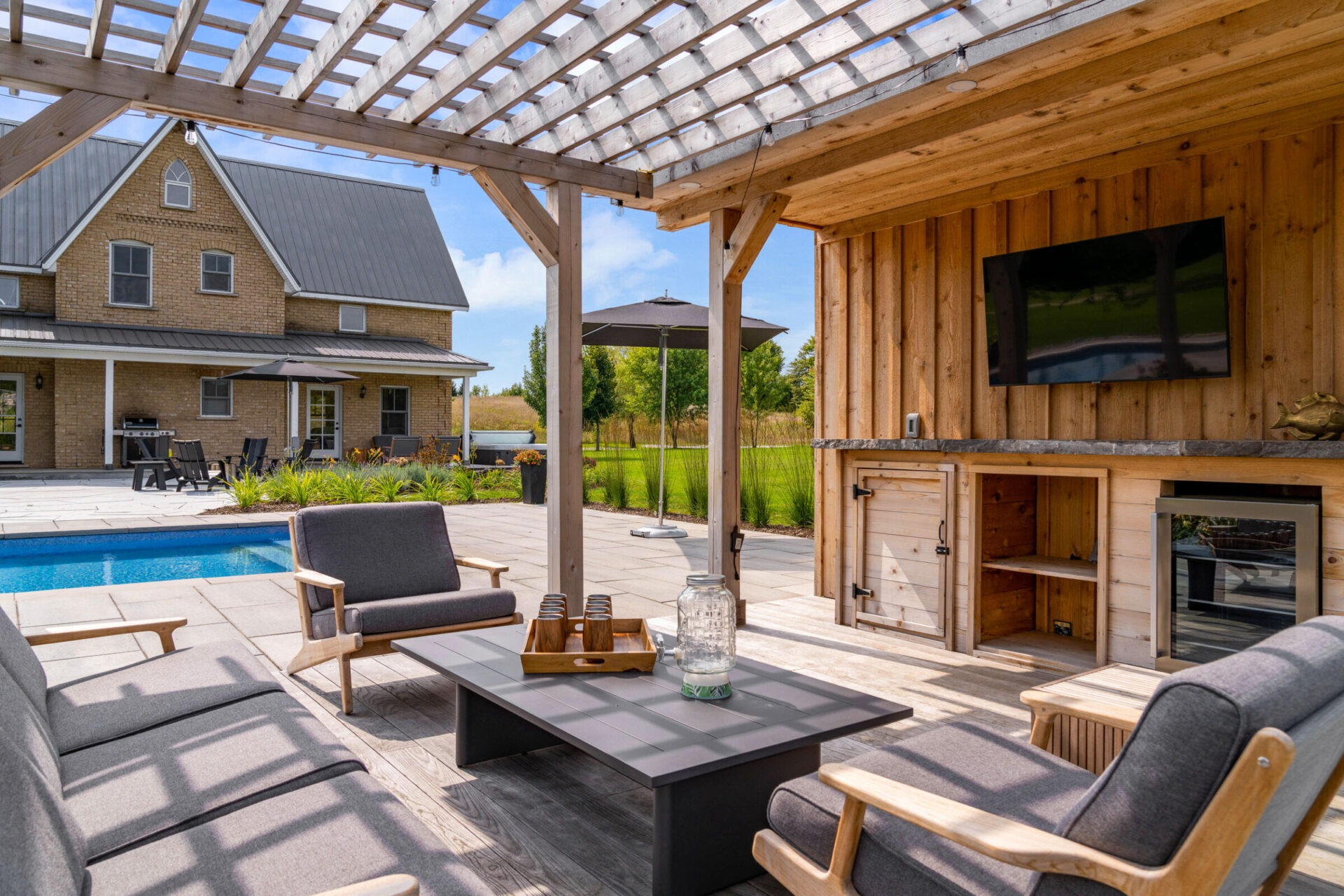
Large properties provide space for multiple outdoor living areas. Instead of one large patio, many homeowners prefer smaller “outdoor rooms” spread across the property. This idea plays an important role in how to design estate landscaping because it encourages people to experience the entire landscape rather than staying in one spot. Outdoor living areas might include:
- Pergolas near dining patios
- Seating areas tucked into gardens
- Shade structures beside water views
- Small fire gathering areas along pathways
These spaces do not need to feel overly formal. Often, a simple seating nook surrounded by native plantings becomes the most inviting place on the property.
A natural rock outcrop might become the base for a seating area, while existing trees can provide shade without requiring additional structures. If you would like a deeper look at the planning process, you can also check our blog, “How to Design a Landscape Plan for Unique Properties“, which explores how natural features can guide thoughtful landscape layouts.
Outdoor living rooms also benefit from sustainable materials such as natural stone, reclaimed wood, and permeable surfaces. These materials help blend built elements into the surrounding environment. Thoughtful gathering spaces bring warmth and personality when looking at how to design a landscape while still respecting the natural setting.
4. Add Recreation Without Chaos: Lawn Games, Trails, And A Putting Green Area

Large landscapes offer wonderful opportunities for recreation, but without careful planning these features can quickly dominate the space. A thoughtful approach to considering how to design estate landscapes keeps recreational areas organized while still allowing room for nature. Popular recreation areas on larger properties include:
- Lawn spaces for games
- Walking trails through wooded areas
- Small putting greens
- Open meadows for seasonal activities
Rather than placing everything in one large open lawn, spreading activities across the property can make each experience feel more intentional. For example, trails can weave through natural sections of the property, while lawn games stay near gathering areas. This separation keeps the landscape feeling peaceful instead of crowded.
Homeowners exploring how to do landscape design often discover that recreation zones work best when they follow the natural terrain rather than forcing flat spaces everywhere. Maintaining balance between recreation and natural areas supports wildlife and plant health while still making the property enjoyable for family and guests.
5. Artificial Turf: Where It Makes Sense
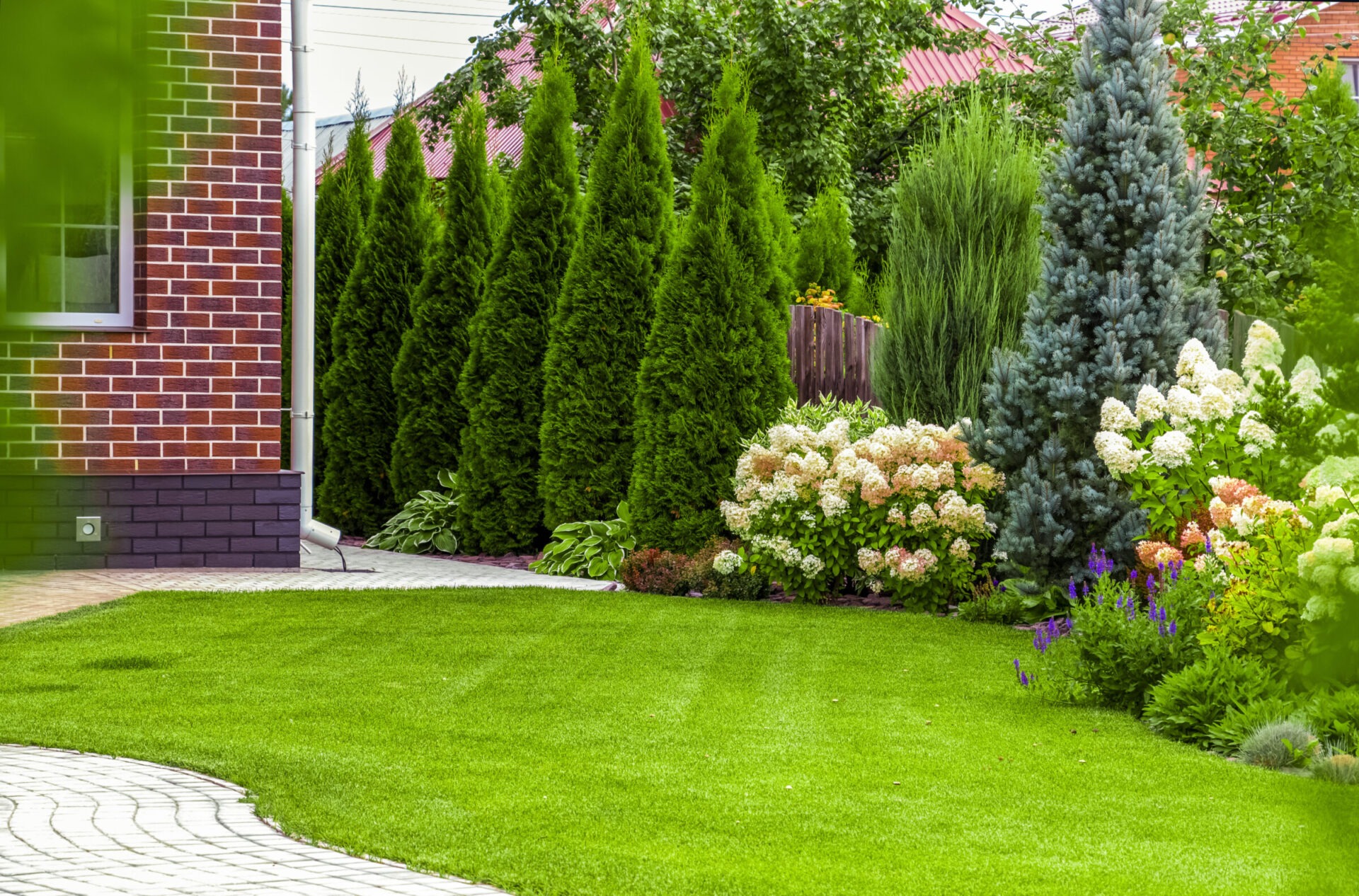
Artificial turf can be a part of figuring out how to design estate landscaping that works for you, especially in areas that receive frequent use. However, turf is not always the best option for large properties. Situations where turf may work well include:
- Small putting greens
- High-use recreation zones
- Shaded areas where grass struggles
But many large landscapes benefit more from natural lawn or meadow plantings. Native grasses, drought-hardy plants, and groundcovers often support soil health while reducing maintenance needs. When considering materials, it helps to think about what is sustainable landscape design going to look like in your area. In simple terms, sustainable landscaping works with natural systems instead of working against them.
For example, native plants support pollinators and local wildlife while requiring less watering. Natural bark mulch and compost-rich soil also help maintain healthy plant growth. In many estate landscapes, carefully placed natural lawn areas blend more easily with surrounding plantings than large sections of artificial turf. Thoughtful material selection helps maintain balance in figuring out how to design a landscape which works for you.
6. Privacy Screens And Plantings That Still Keep Sightlines Open
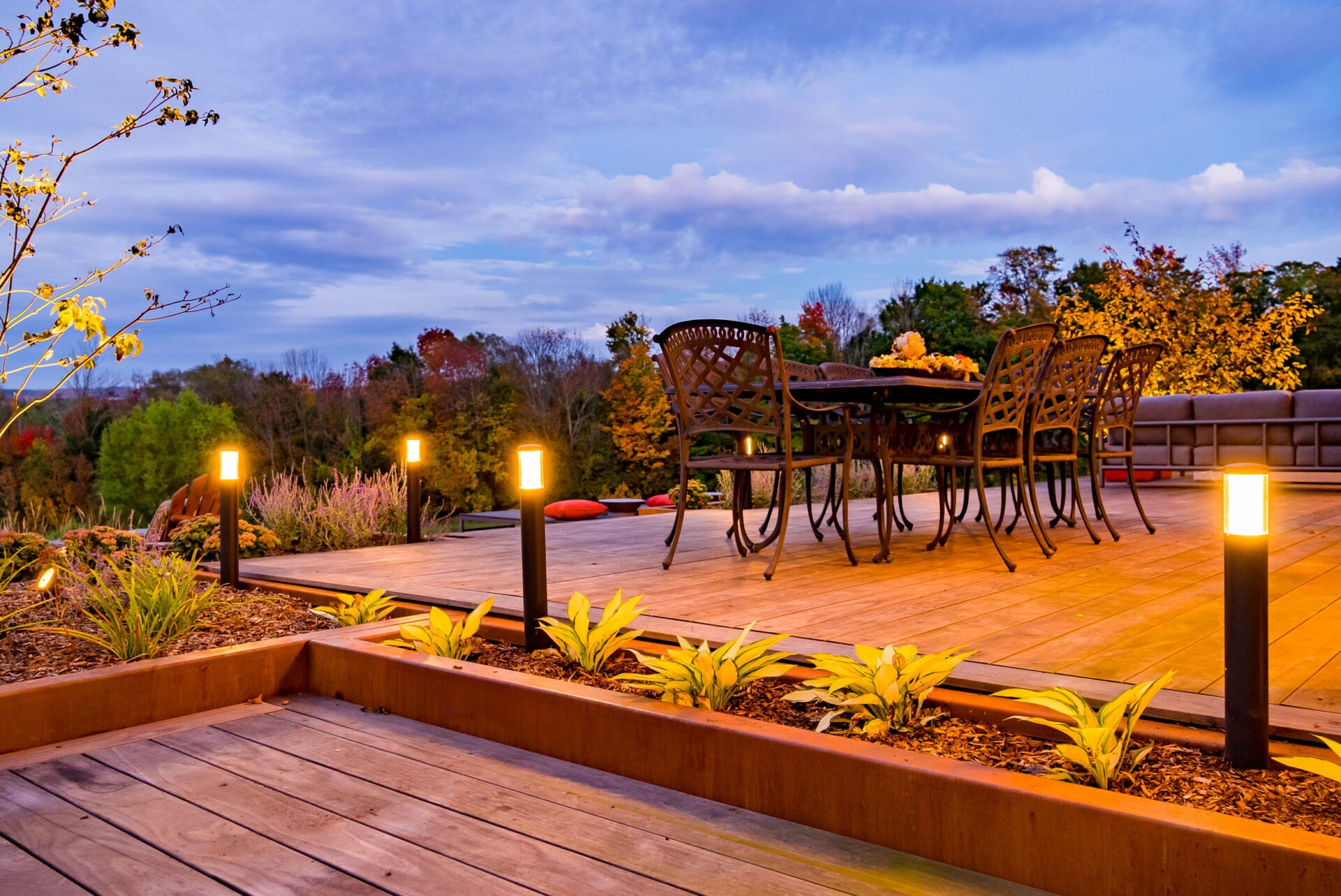
Large properties may offer wide views, but privacy can still be important around gathering areas or hot tubs. One of the more subtle skills in designing estate landscapes involves creating privacy without blocking the landscape entirely. Instead of solid fencing, many designers use layered plantings such as:
- Native shrubs
- Ornamental grasses
- Small trees placed in clusters
These layers soften views while still allowing light and air to move through the space. Strategic plant spacing also supports plant health by improving airflow. This helps prevent disease and reduces the need for chemical treatments. For homeowners exploring do it yourself landscape design, planting layers can be one of the most rewarding techniques to experiment with. It allows you to shape privacy gradually while observing how the garden evolves.
Thoughtful planting also reflects the idea that landscape design is not simply decoration. When considering what landscape design is, it becomes clear that it combines aesthetics, ecology, and practical function. If you are interested in seeing how these ideas come together on real properties, you can explore our landscape design services to learn more about how sustainable planning and planting choices shape healthy outdoor spaces. Balancing privacy and openness is an important part of how to design a landscape successfully.
7. Creating Views: Framing, Revealing, and Screening
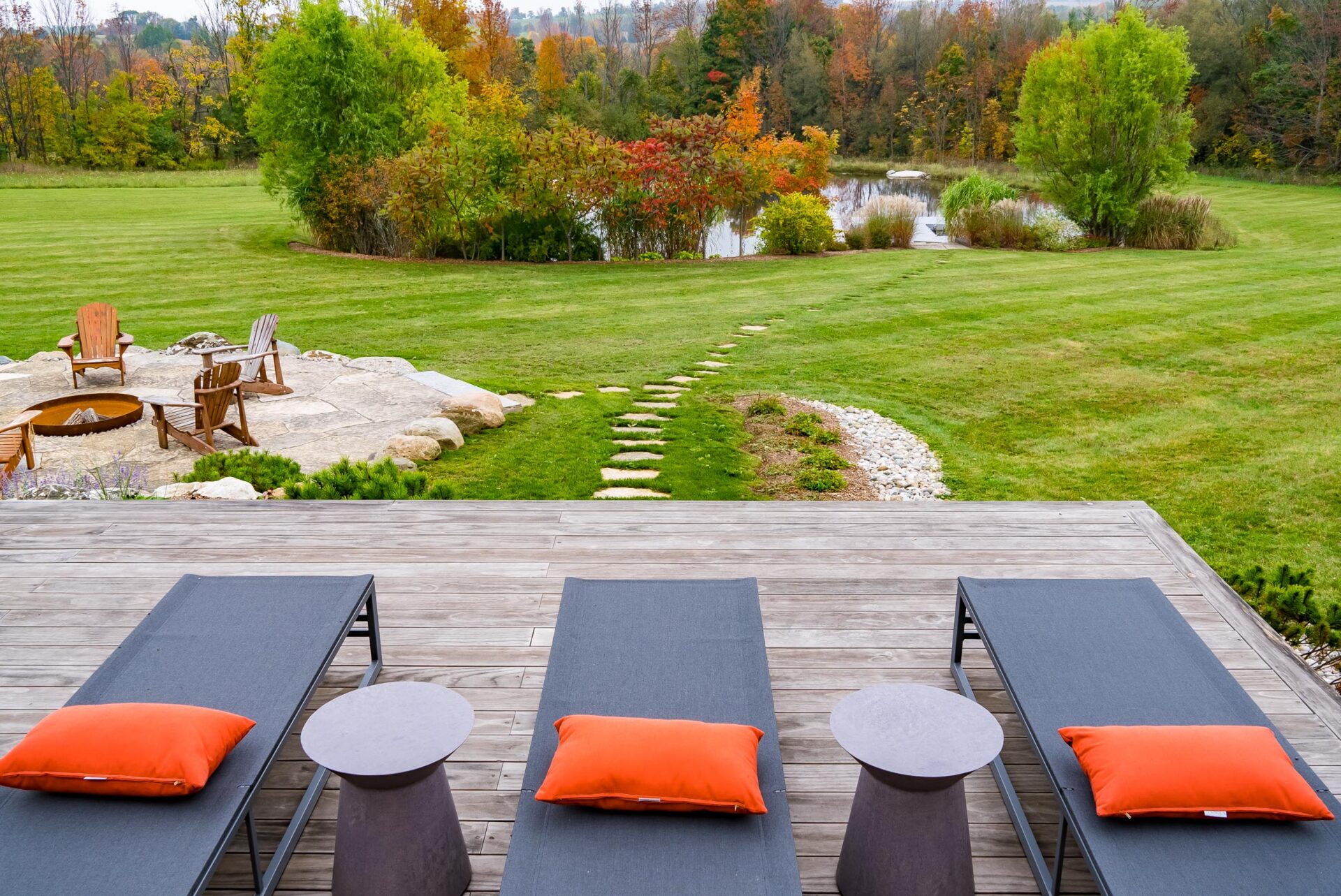
Waterfront properties often have beautiful natural scenery, but not every part of the landscape is equally attractive. A key principle in designing estate landscapes involves shaping how views appear as people move through the space. There are three helpful techniques:
- Framing
Trees or structures guide attention toward scenic views. - Revealing
Curving pathways slowly uncover new areas of the property. - Screening
Less appealing areas remain hidden behind plantings.
For example, service areas or compost zones can be tucked behind shrub borders while still remaining accessible. Understanding how to draw landscape design plans can make view planning easier. Even simple sketches showing lines of sight from patios or pathways can help identify where framing elements should be placed. Careful view planning helps large properties feel intentional and visually balanced.
8. Water And Heat Features: Pools, Hot Tubs, Saunas, Cold Plunge, And Fire Features
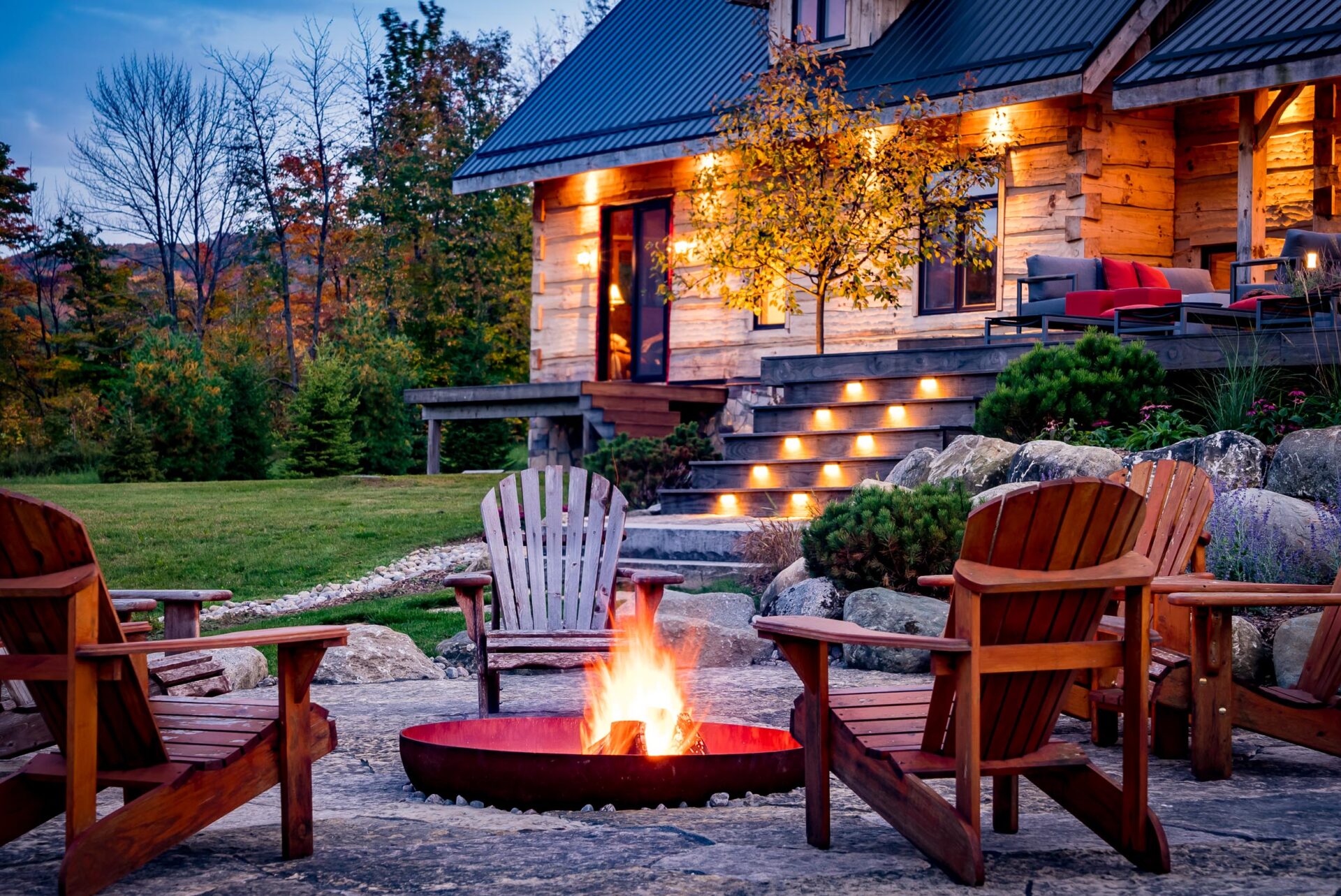
Water and heat features bring comfort and relaxation to estate landscapes. They also extend outdoor use into cooler seasons. When considering how to design estate landscaping, these features often become gathering points within the living zones. Examples include:
- Pools near seating areas
- Hot tubs overlooking natural views
- Saunas tucked into wooded sections
- Cold plunge tubs for contrast
- Fire features for evening gatherings
Placement matters. These elements should feel connected to the surrounding landscape rather than appearing isolated. Sustainable design practices can also guide construction choices. Permeable stone surfaces and thoughtful grading help return water naturally to the soil rather than directing runoff toward nearby waterways. Balancing comfort with environmental awareness is an important principle when learning how to design an estate landscape.
9. Green Roofs On Outdoor Structures: When They’re A Good Fit
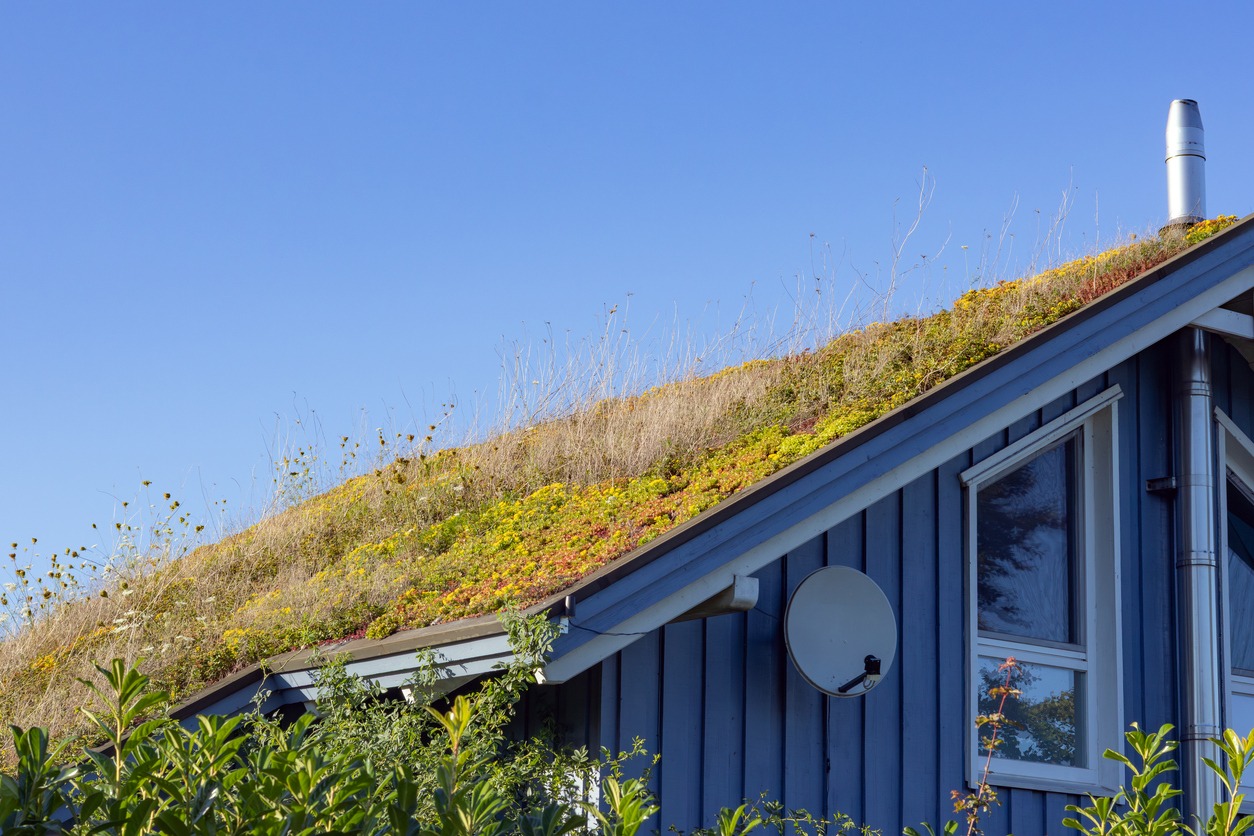
Outdoor structures such as sheds, pergolas, and garden studios can sometimes support green roofs. These planted roof systems offer several environmental benefits. They can:
- Reduce stormwater runoff
- Provide a habitat for beneficial wildlife
- Improve insulation
- Blend structures into the landscape
However, green roofs require proper structural support and drainage planning. They work best on flat or gently sloped roofs designed specifically for this purpose. When thinking about how to design an estate landscape, green roofs can help large properties feel more connected to the natural environment. Native plants and drought-tolerant species often perform well in these settings because they require minimal maintenance. Like many elements of sustainable design, green roofs work best when they support the broader landscape rather than becoming a stand-alone feature.
10. Planting For Proactive Pest Prevention: Airflow, Spacing, And Resilient Choices
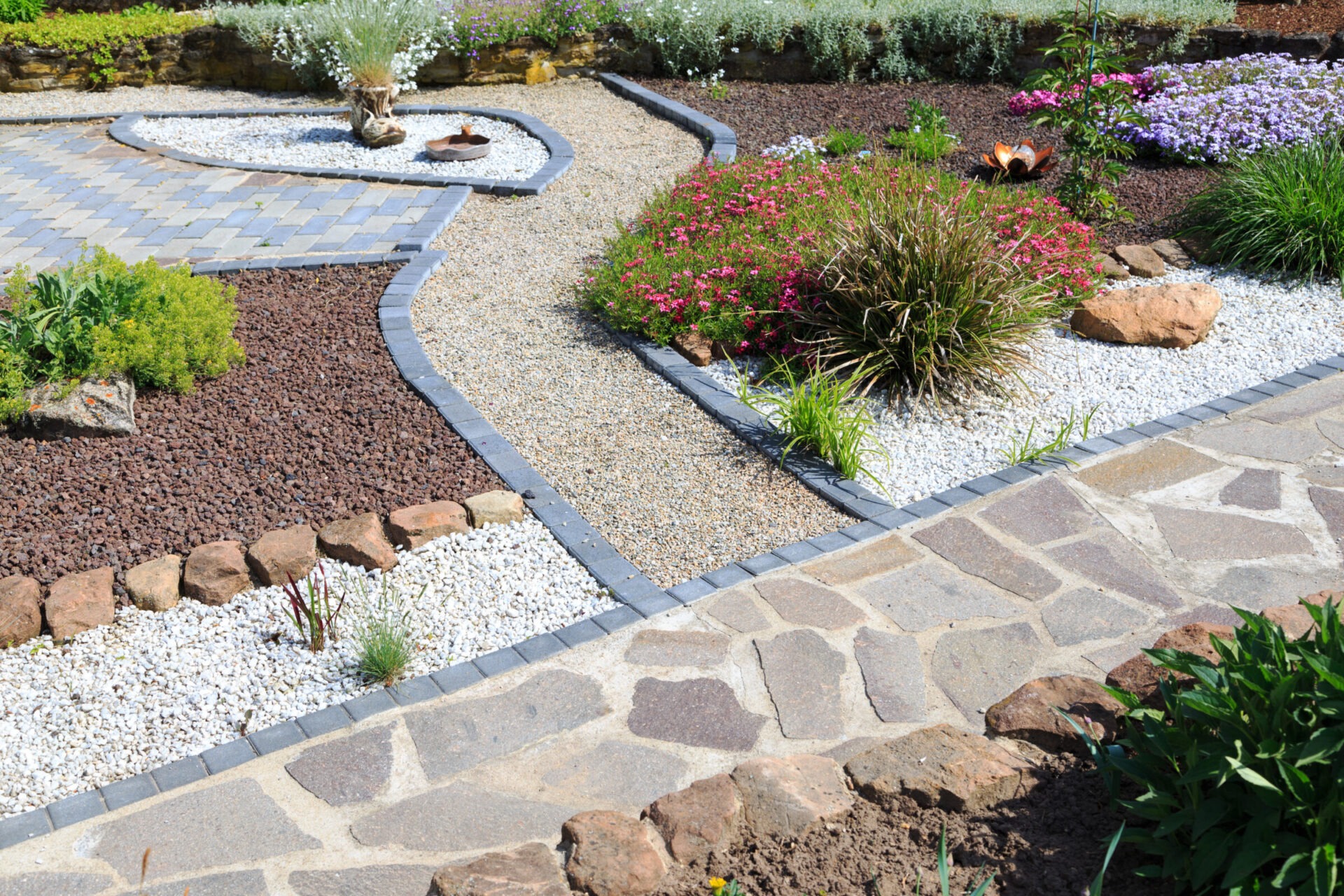
Healthy gardens often begin with healthy planting practices. One of the final steps in designing an estate landscape involves selecting plants that support natural pest management. Instead of relying on sprays, thoughtful planting design can help prevent problems before they start. Helpful strategies include:
- Proper plant spacing for airflow
- Choosing native or climate-adapted plants
- Mixing plant species for biodiversity
- Maintaining healthy soil with compost
Air circulation between plants reduces fungal issues. Diverse plantings also discourage pests from spreading quickly. Many gardeners prefer natural pest management methods that rely on beneficial insects and resilient plant varieties. This approach reflects the broader philosophy behind sustainable landscape care: working with nature rather than trying to control it entirely.
Making Your Large Landscapes Look Amazing
Learning how to design estate landscaping for large properties involves thoughtful planning, environmental awareness, and a clear understanding of how people use outdoor spaces. By organizing zones, planning circulation, shaping views, and selecting resilient plants, large landscapes become easier to enjoy and maintain. Sustainable practices such as native planting, natural soil care, and careful grading also help protect nearby waterways and wildlife habitats.
If you are planning improvements to a large property in Grey Highlands or Georgian Bay, thoughtful landscape design can help your land feel organized, welcoming, and connected to the surrounding environment. For guidance tailored to your property, request a consultation.
Summary
If you are learning how to design estate landscaping for a large property, start by dividing the land into clear zones, connecting them with paths, creating gathering areas, shaping views, and selecting resilient plants. A thoughtful approach to how to design a landscape helps large properties feel organized while supporting the natural environment.