
Waterfront properties in the Grey Highlands and Georgian Bay are beautiful but come with unique challenges. Strong winds, sloped terrain, and sensitive shorelines can make outdoor planning more complex while still aiming for spaces to gather and enjoy the water views.
Many homeowners start with plants or patios first, which can lead to drainage issues or struggling gardens. Understanding sustainable landscape design helps you plan with soil health, water flow, and resilient planting in mind.
What Is Sustainable Landscape Design In Everyday Terms?
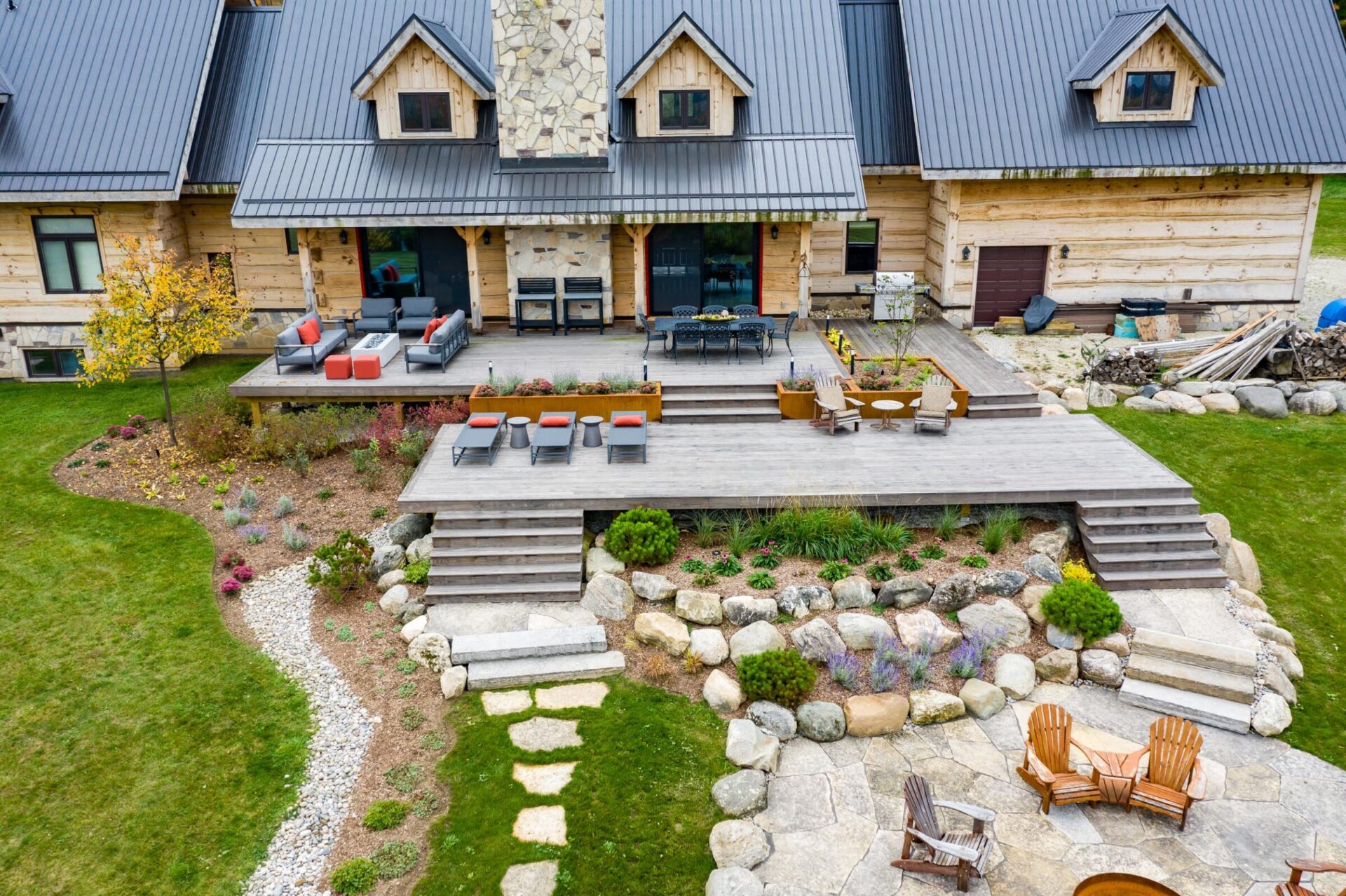
At its core, it means shaping outdoor spaces in a way that supports the land rather than exhausting it. Rather than forcing the property into a fixed layout, the design follows natural conditions like sunlight, wind patterns, water movement, and soil structure. In everyday terms, it means:
- Choosing plants suited to the local climate
- Allowing rainwater to soak back into the ground
- Protecting shoreline ecosystems
- Reducing reliance on chemical sprays
- Building outdoor spaces that age well over time
For homeowners near Georgian Bay, this approach helps address strong weather, shifting soils, and sensitive ecosystems while still creating comfortable outdoor spaces.
What’s The First Step Before Choosing Your Plants Or Landscape Features?
Before selecting plants, patios, or structures, the most important step is understanding the site itself. This stage answers a simple question many homeowners ask: “What is landscape design really about?” It begins with observation. Walk your property and note:
- Where water naturally flows after rain
- Areas with strong winds or full sun
- Shady sections near trees or buildings
- Natural slopes or rocky outcrops
- Existing vegetation that thrives
When you observe these details, you begin to understand how the property naturally functions. The design plan should support these patterns rather than trying to change them. This early stage also prevents future problems with drainage, erosion, and struggling plants.
How Does Soil Type (Clay Vs Sandy) Change The Design Plan?
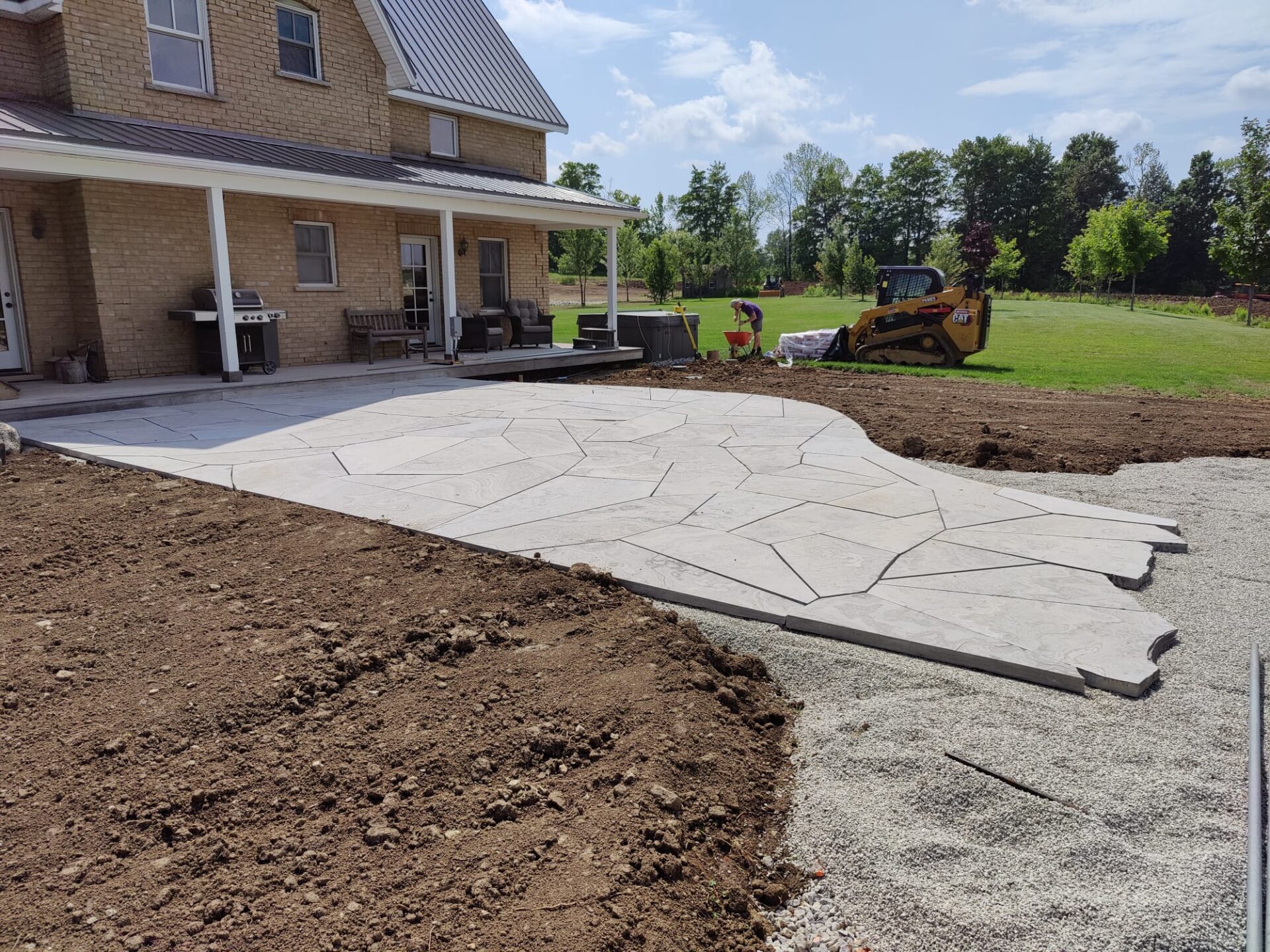
Soil plays a major role in how a landscape functions. Clay and sandy soils behave very differently:
Clay Soil Characteristics
- Holds moisture for longer periods
- Drains slowly
- Can become compacted
Sandy Soil Characteristics
- Drains quickly
- Warms up faster in spring
- Holds fewer nutrients
Your design choices should reflect these differences. For example, clay soils may benefit from:
- Organic compost additions
- Raised planting areas
- Water-tolerant plants
Sandy soils often require:
- Mulch layers to retain moisture
- Deep-rooted native plants
- Soil-building organic materials
How Do You Plan Outdoor Living Spaces Without Working Against the Space?
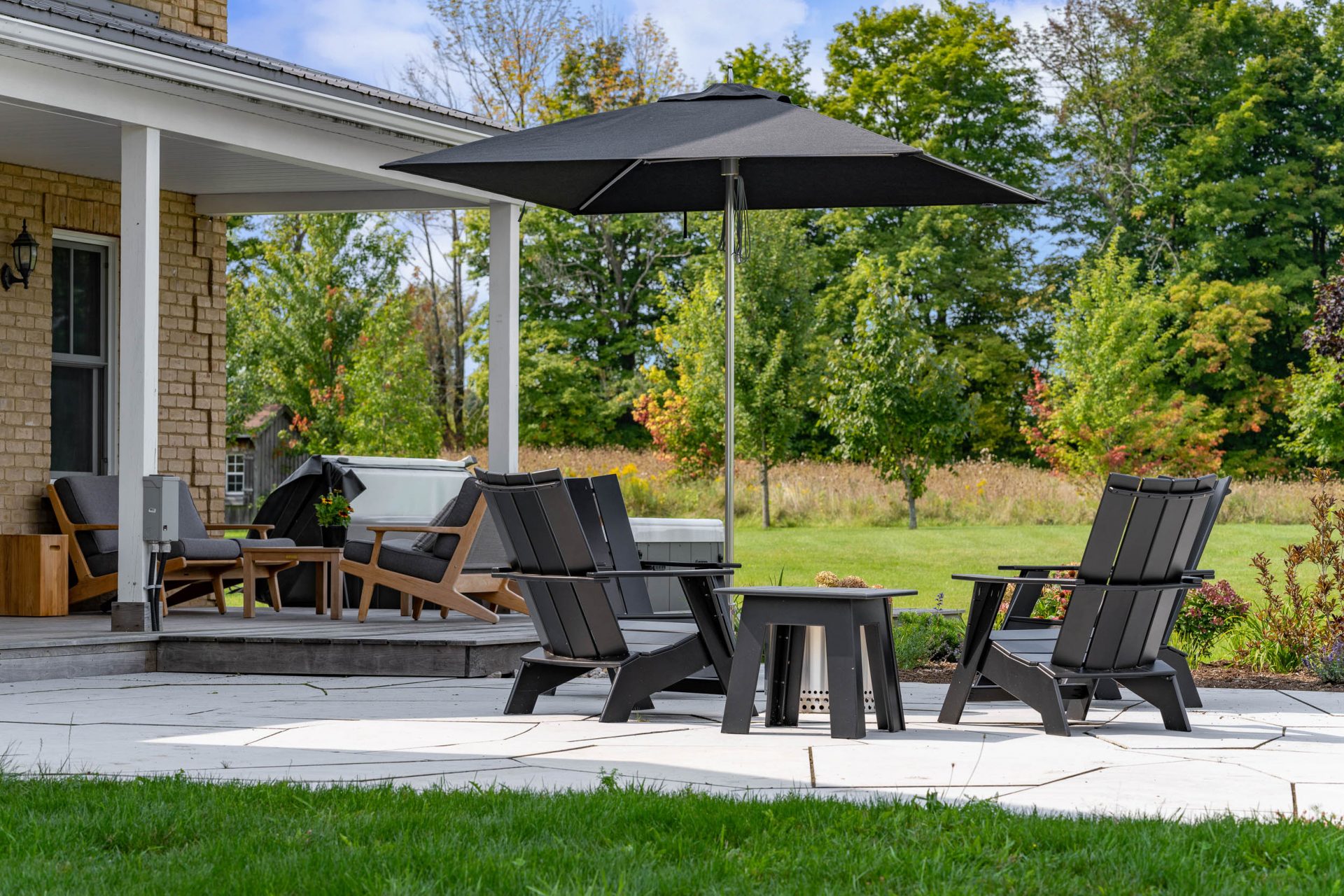
Outdoor living areas should feel like natural extensions of the landscape. When considering how to design a landscape plan, think about the relationship between spaces:
- Dining areas near the home
- Quiet seating spots overlooking views
- Pathways connecting gardens and terraces
- Natural transitions between lawn, planting beds, and stonework
If you’d like a deeper look at planning outdoor spaces for complex sites, check our guide: “How to Design a Landscape Plan for Unique Properties“.
How Do You Create And Protect Views While Still Planting For Resilience?
Waterfront views are often the highlight of a property, but they should be preserved carefully. Rather than leaving large areas bare, thoughtful plant placement keeps views open while helping support the shoreline ecosystem. Helpful strategies include:
- Using lower-growing plant species near sightlines
- Placing taller trees off to the sides of view corridors
- Grouping plants rather than scattering them individually
These choices maintain visual access to the water while supporting soil stability and wildlife habitat.
What’s The Best Way To Plan Privacy Without Making The Yard Feel Closed-In?
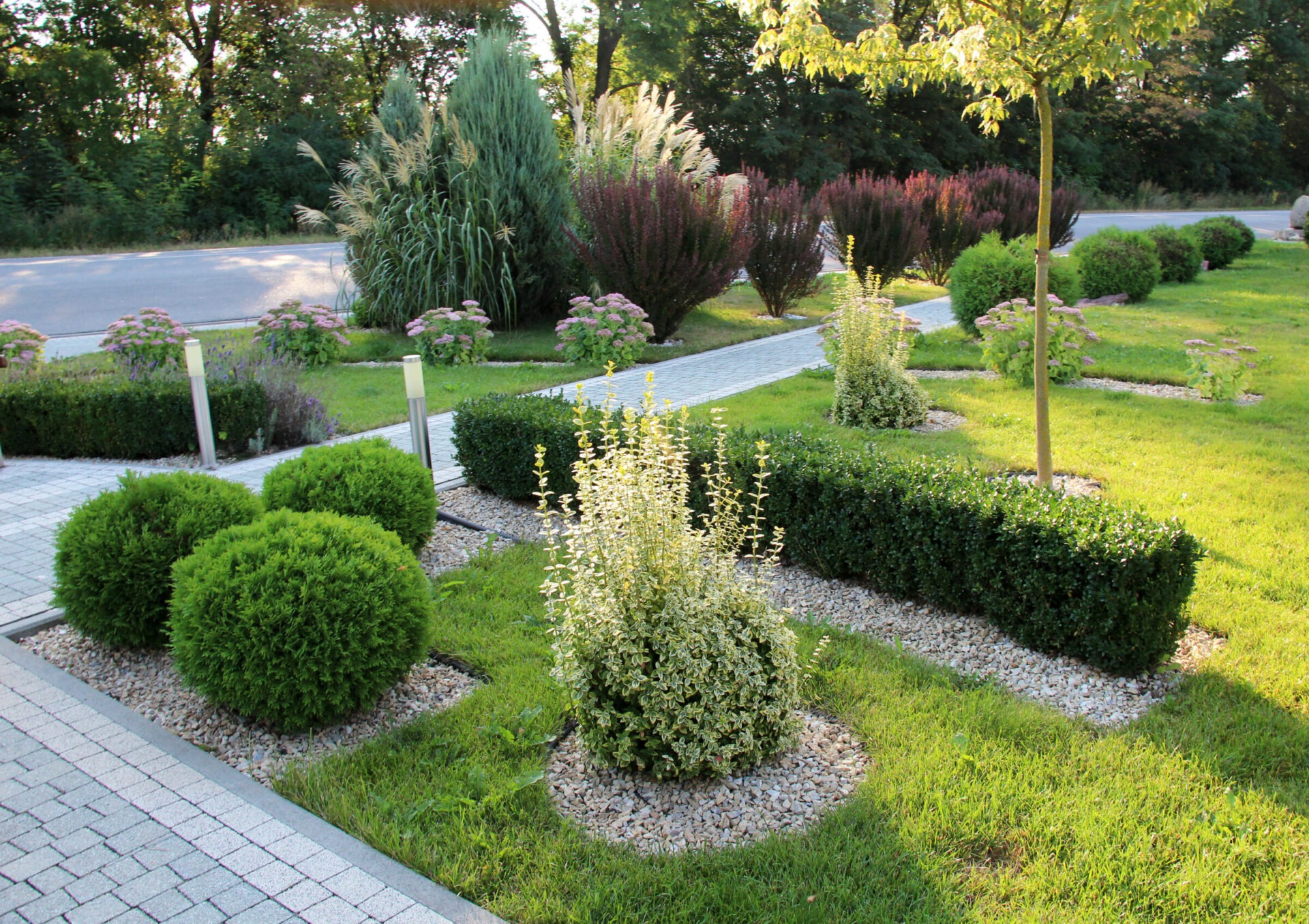
Privacy doesn’t need to come from tall fences or dense hedges alone. Instead, layered planting can provide a softer, more natural solution. Consider combining:
- Small trees for an overhead canopy
- Shrubs for mid-level screening
- Perennials and grasses for ground-level coverage
This approach maintains privacy while still allowing airflow and filtered views. In many cottage landscapes, gentle planting layers also help gardens blend into surrounding woodland areas.
What Does “Grading” Mean, And Why Does It Show Up In Every Good Plan?
Grading refers to shaping the land so water moves safely across the property. In many projects, grading supports sustainable landscape design. It directs rainwater away from buildings while allowing moisture to soak back into the soil instead of running into storm systems. A well-planned grading strategy may include:
- Gentle slopes directing water into garden beds
- Stone channels guiding runoff
- Permeable surfaces for patios and paths
- Soil contours that slow erosion
This landscape design approach is especially important on sloped or waterfront properties, where water movement can quickly affect plant health and shoreline stability.
Where Do Pergolas And Shade Structures Work Best On Windy Or Exposed Sites?
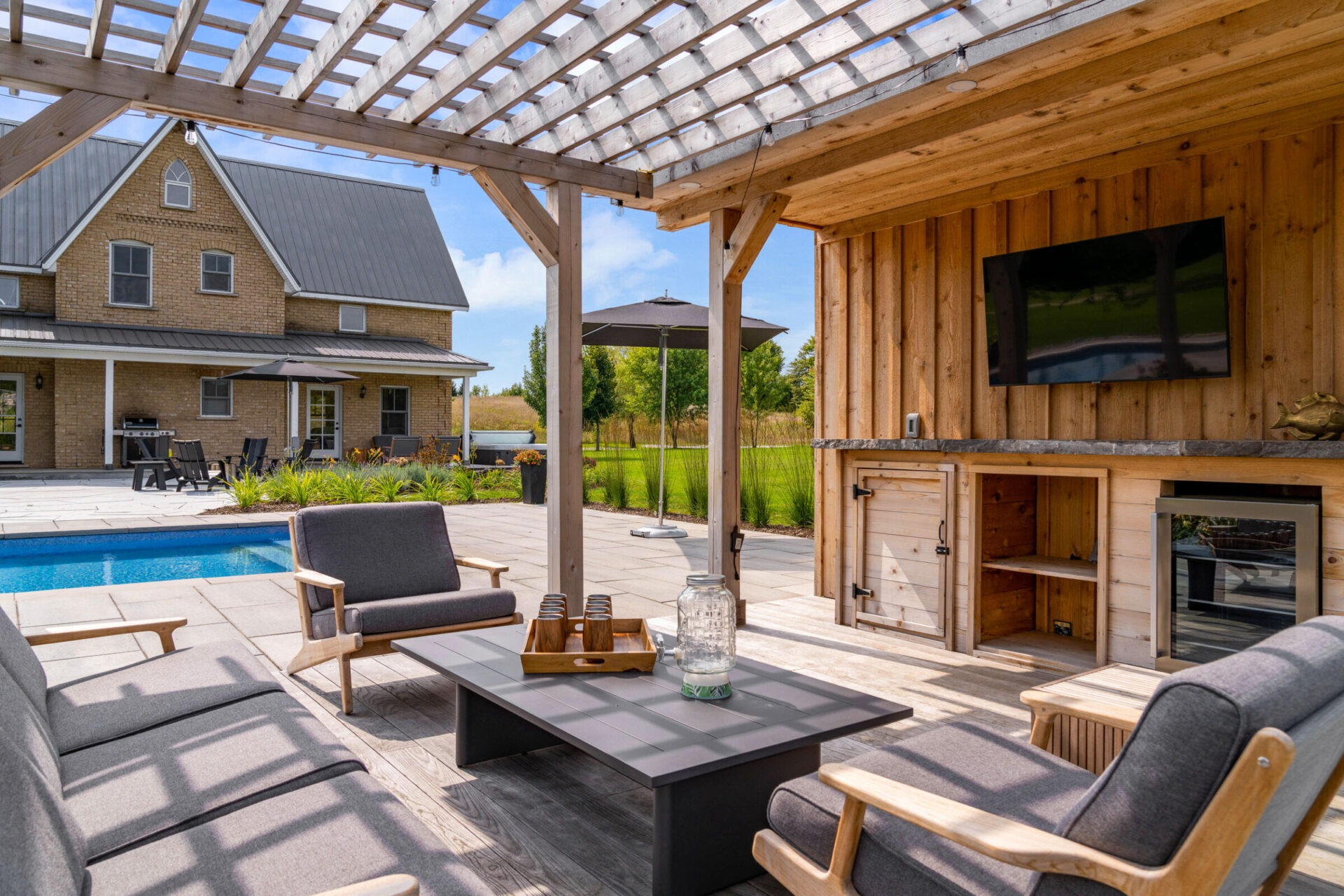
Wind exposure is common along Georgian Bay. Shade structures need to be carefully constructed to remain comfortable and stable. Pergolas work well when you have them made:
- Near the home for wind protection
- Along stone terraces or patios
- Within garden zones where plantings soften the structure
Using natural materials and open designs for these beautiful structures allows wind to pass through rather than creating resistance.
What Should Homeowners Think About Before Adding A Fire Feature?
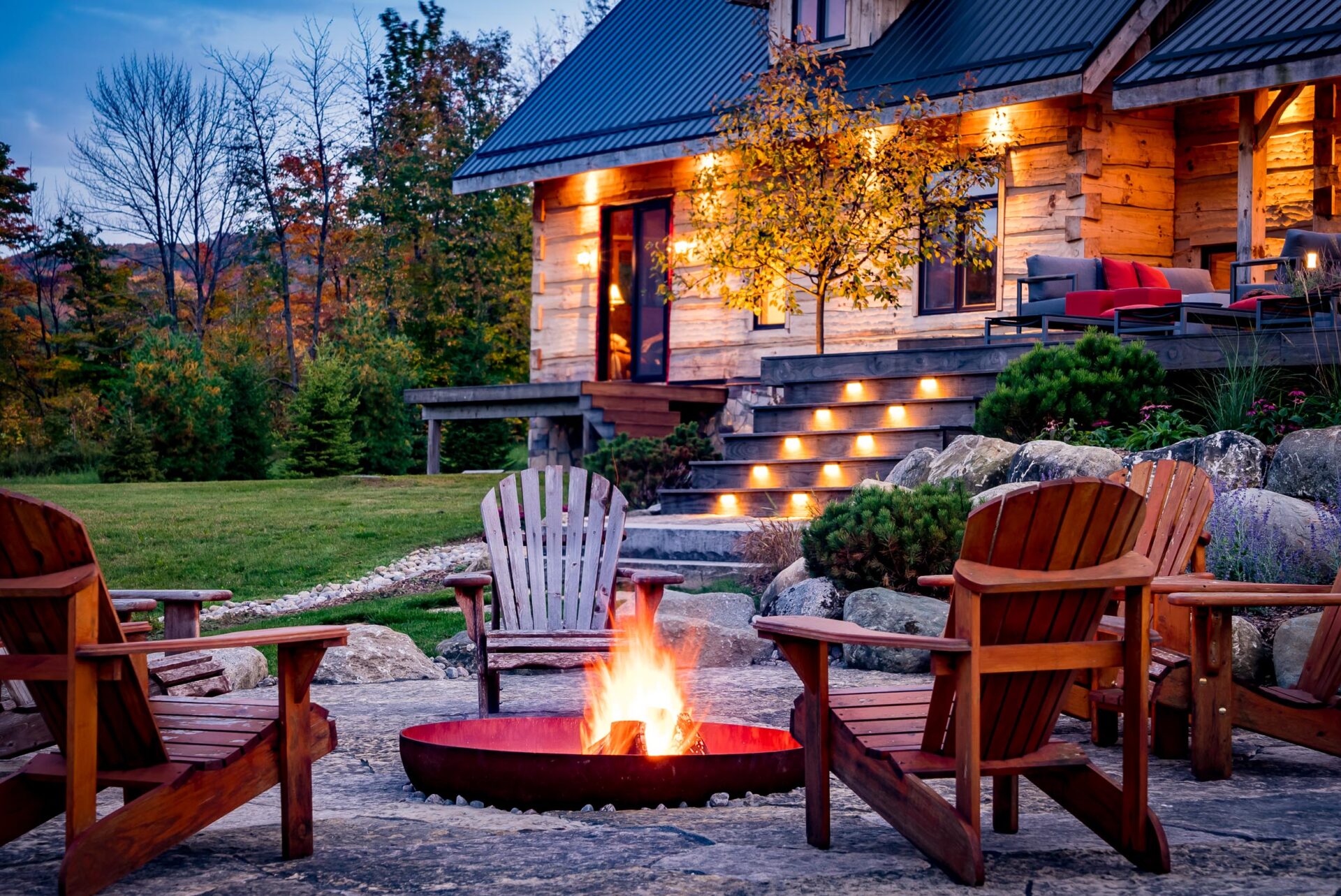
Fire features can extend outdoor use into cooler evenings, but they require careful placement. Before installing one, consider:
- Distance from buildings and trees
- Prevailing wind direction
- Seating arrangement and safety access
- Surface materials surrounding the fire area
Wood-burning features often suit rustic settings, while gas options may offer more control in tighter spaces.
How Do Pools Affect Layout, Drainage, And Planting Choices?
Pools influence several elements of the landscape plan. Grading around the pool should direct water away from the area. Plant selections should also handle occasional splashing and heat reflected from stone or concrete surfaces. Common design considerations include:
- Non-slip stone or textured paving
- Wind-tolerant plants near open pool areas
- Shade structures for comfort during hot days
When integrated properly, pools can blend naturally with garden spaces rather than dominating the entire property. If you’d like to explore how a full property layout supports these elements, you can learn more about our Landscape Design services.
How Do Integrated Hot Tubs, Saunas, And Cold Plunge Areas Fit Into A Plan?
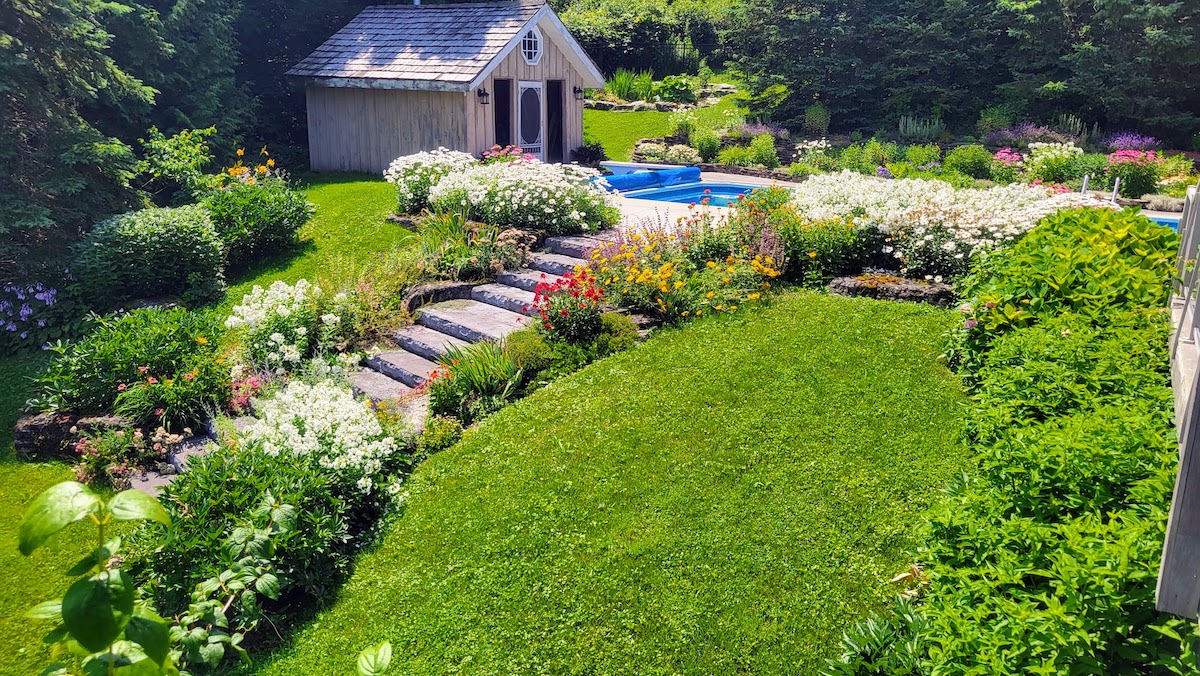
Wellness areas are becoming more common in cottage landscapes. When planning these features, it helps to think about circulation and privacy. You may want:
- Short pathways connecting sauna and plunge areas
- Natural screening using shrubs or small trees
- Stone or wood decking that remains safe in winter
These areas often work best when tucked slightly away from the main patio, creating a quiet retreat within the garden.
What Does “Proactive Pest Prevention” Look Like In A Planting Plan?
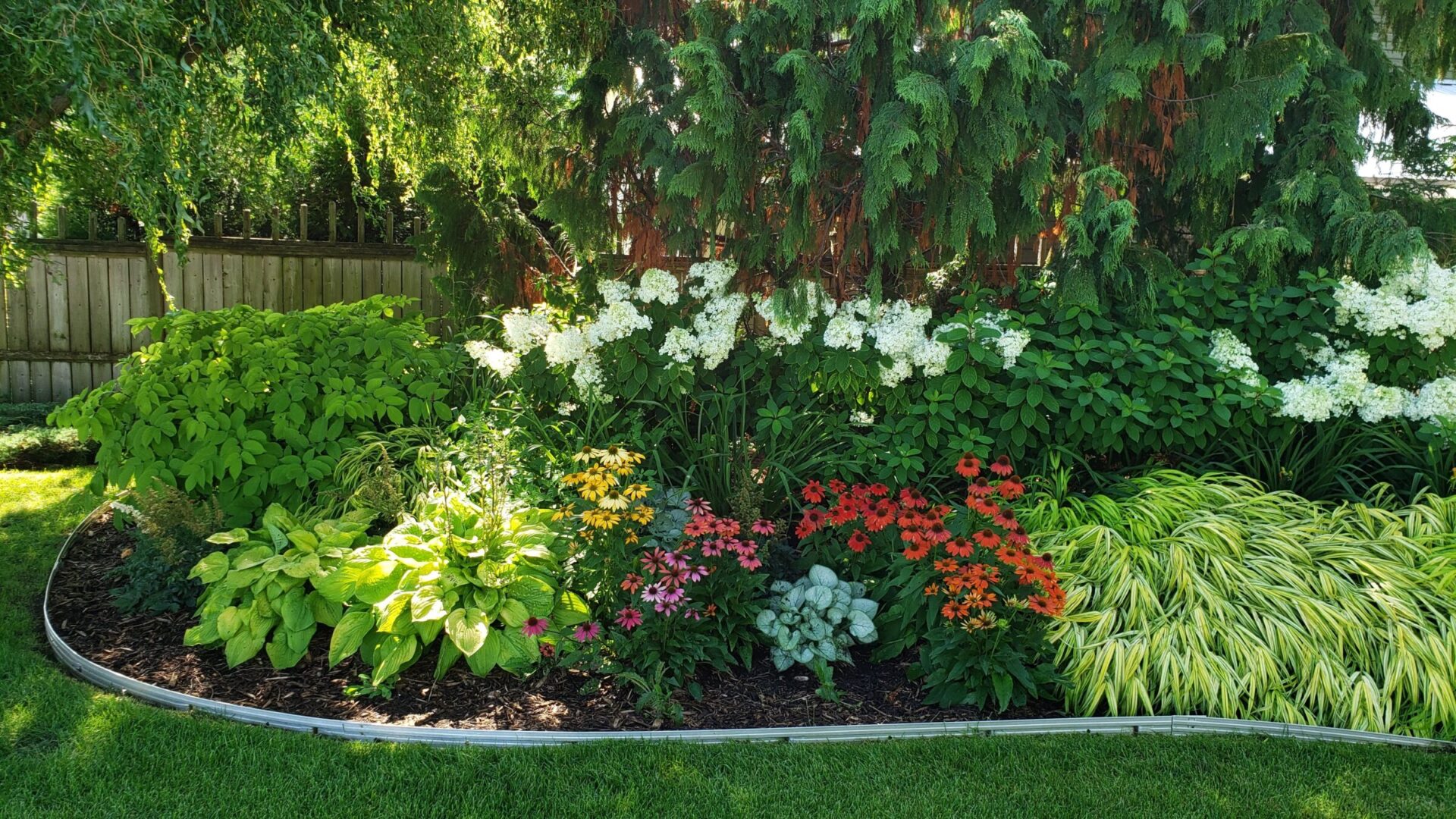
Healthy ecosystems naturally discourage pest problems. A proactive approach to what sustainable landscape design is focuses on plant diversity and soil health rather than reactive treatments. Key strategies include:
- Mixing plant species rather than monocultures
- Encouraging beneficial insects
- Building soil fertility with compost
- Selecting resilient plant varieties
These methods create balance in the garden while reducing the need for harsh treatments.
How Do Native And Drought-Hardy Plants Support Lower-Impact Maintenance Over Time?
Native and climate-adapted plants are a cornerstone of what sustainable landscape design is. These plants are naturally suited to the local environment. Once established, they usually need less watering and minimal upkeep. Benefits include:
- Strong root systems that stabilize soil
- Better tolerance to seasonal weather changes
- Support for local pollinators and wildlife
For waterfront properties, these plants also help protect shorelines and reduce erosion.
What Are The Common Planning Mistakes On Waterfront, Sloped, Or Cottage Properties?
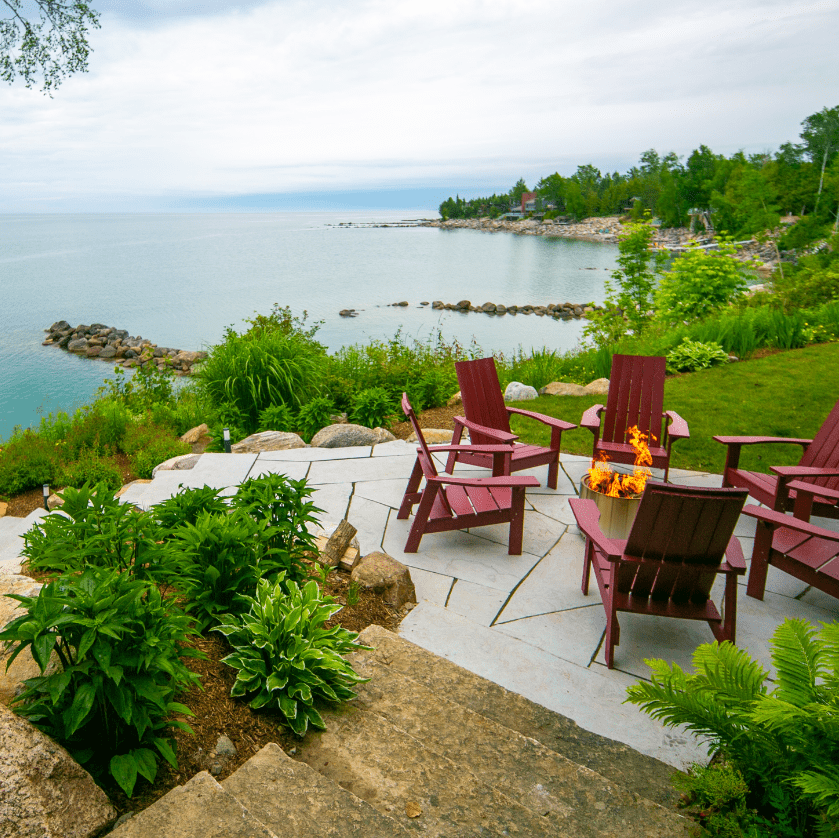
Many challenges come from skipping the planning phase. Common issues include:
- Installing patios without addressing drainage
- Removing too much natural vegetation
- Choosing plants unsuited to wind exposure
- Overlooking shoreline protection
Thoughtful planning protects both the landscape and the long-term enjoyment of the property.
Creating Landscapes That Work With The Land
A well-planned landscape should feel like it belongs to the place where it grows. When outdoor spaces respect natural patterns, they become easier to maintain and more resilient over time. If you’re exploring ideas for your property, thoughtful guidance can make the process clearer and more enjoyable. Request a consultation to help you find direction and start a project you can be proud of.
Summary
If you’ve been wondering what sustainable landscape design is, it simply means planning outdoor spaces in a way that respects soil, water, climate, and local ecosystems. Instead of forcing the land to fit a rigid layout, the design works with natural conditions so gardens remain healthy, resilient, and easier to care for over time.